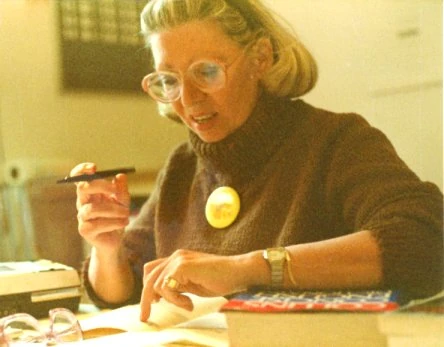
At a young age, Beki changes her name to Betty and explores everchanging forms with her creativity. When still living in Istanbul, where she was born in 1927, she studies the ancient art of miniature, designs jewellery and clothes. After marrying Maurizio Danon and moving to Italy, she adopts her husband’s surname, becoming known as Betty Danon.
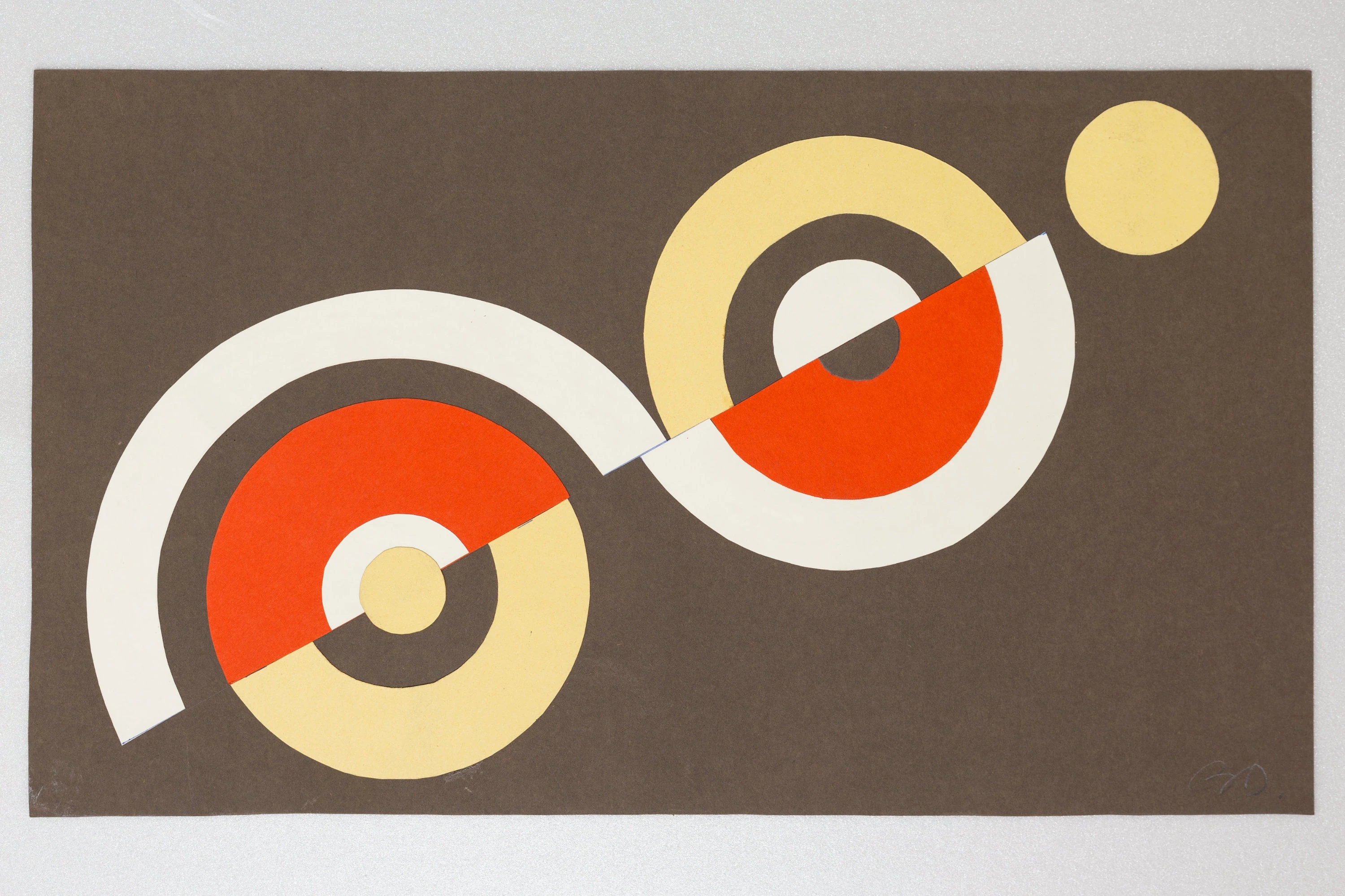
Her first works date back to 1969 and are collages created to decorate her husband’s new studio. At the time, Betty was following a Jungian therapy, and it is precisely the teachings of Carl Gustav Jung, together with her first explorations of Eastern philosophy, which become a very important reference throughout her production. These visions are formalized in daring geometrical compositions, with the mandala, a powerful archetypal figure, as a recurring figure.
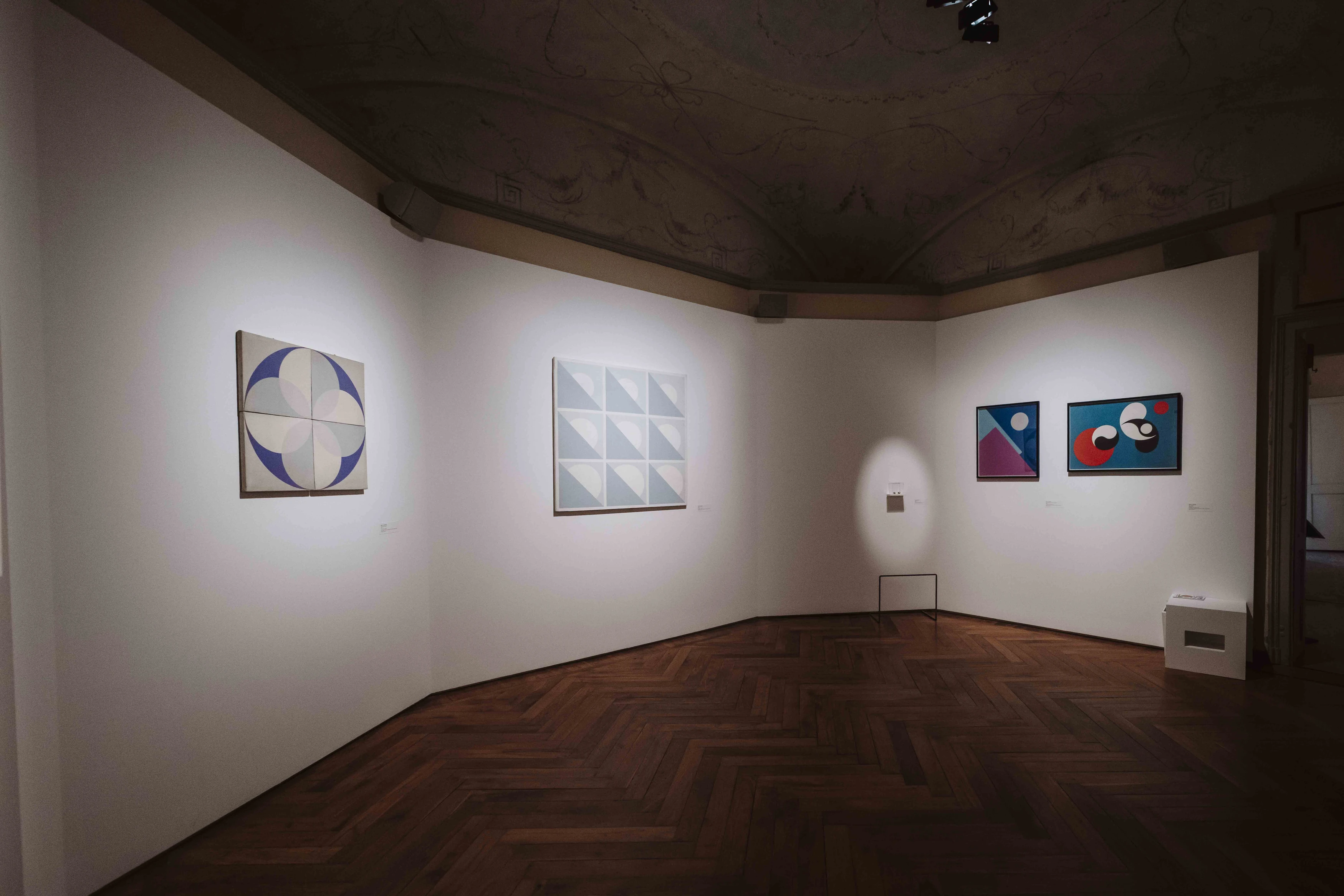
Betty Danon elaborates real cosmic-symbolic representations through collage, by cutting and overlying, Yin-Yang, 1969-70 combining and intersecting shapes made from paperboard of different colors. In the artist’s 1972 poetic statement, we read that the circle is “a magic archetype, an eternal perfect absolute total.” Later, the circle breaks to become “shadow - light, conscious - unconscious, yin and yang.” When the circle disappears, the square takes over, followed by the mandala which in itself represents the cosmos through the dialectic of opposites.
Thanks to Mandel’s suggestions, Betty started going to art galleries and finding her way in the art world, meeting other artists of her generation who at the time were working with painting, a technique new to her, but which strongly intrigued her. And so, in total coherence with the work done up to that dot, the artist began to devote herself to painting, with surprising results, continuing her research on spirituality through geometry, a feature that had characterized the first part of her production. Danon’s works, exhibited in her husband’s studio, are seen by Gabriele Mandel, who in addition to being an art historian was a psychologist and shared an interest in Jung with Danon.
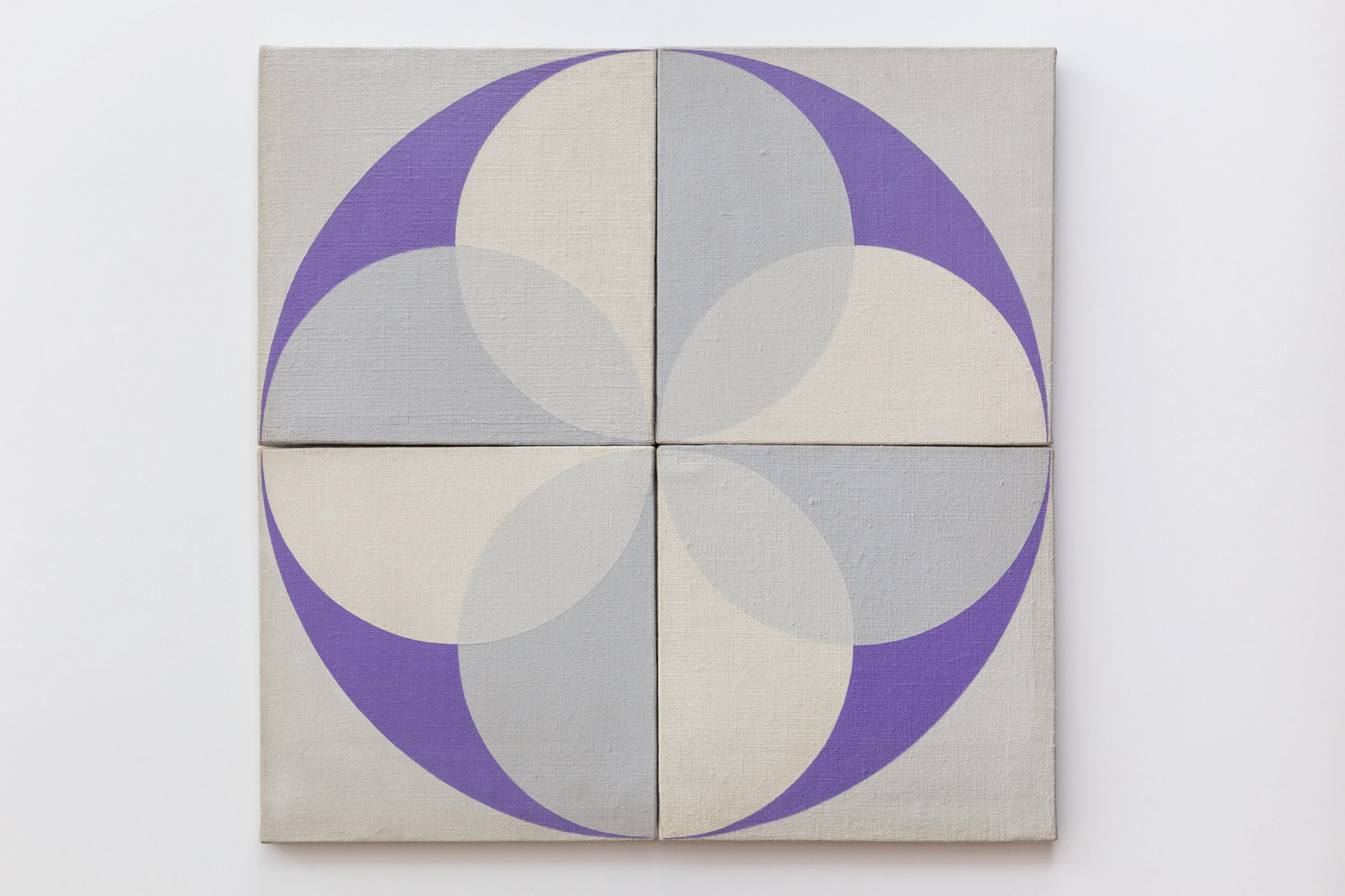
For him, it is immediately clear that those works are not a simple exercise in style, but the formalization of a precise inner research that flows into an artistic project. Thanks to Mandel’s suggestions, Betty started going to art galleries and finding her way in the art world, meeting other artists of her generation who at the time were working with painting, a technique new to her, but which strongly intrigued her. And so, in total coherence with the work done up to that dot, the artist began to devote herself to painting, with surprising results, continuing her research on spirituality through geometry, a feature that had characterized the first part of her production. Her works on canvas are configured using different shades of grey and a greater attention to space, which develops through modules repeated rhythmically.
In some cases, they look like metaphysical architecture; in others, like rarefied landscapes created with extreme formal rigor, in which the emotional element is subtly present, sublimated. These are works that the artist herself calls “atonal paintings,” a term with which she referred to the soft appearance of the colors: the term “atonal,” in fact, is not common in painting (although its opposite, “tonal”, is), while instead it is used in the context of music, where it indicates the lack of a tonal centre. This shift from painting to music has to be kept in mind because soon Betty Danon’s work would strongly connect to the sphere of sound. The atonal paintings are related to a precise moment in Betty’s life, i.e. between1972 and 1973, and consist of a limited batch of about 50 works.
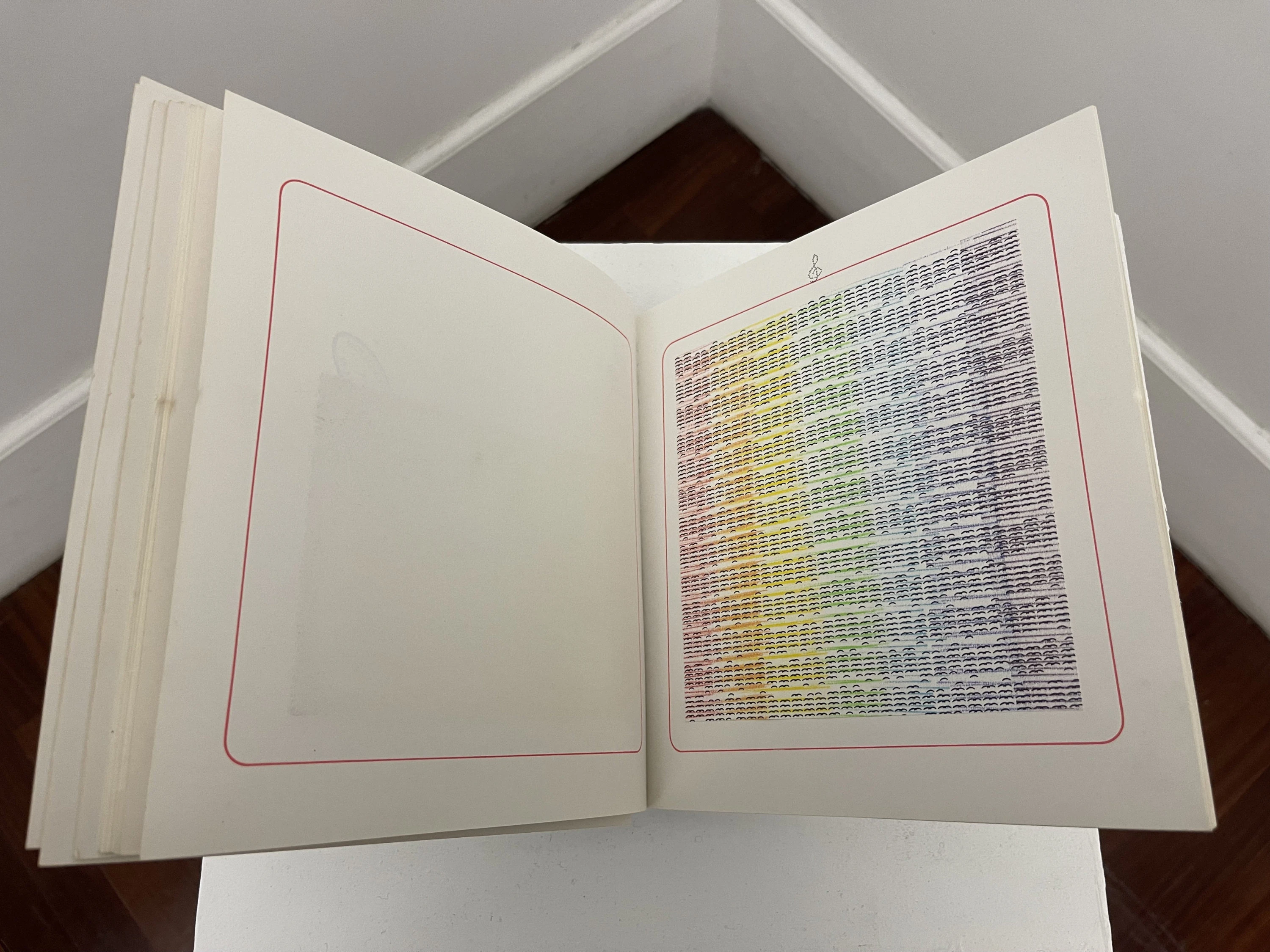
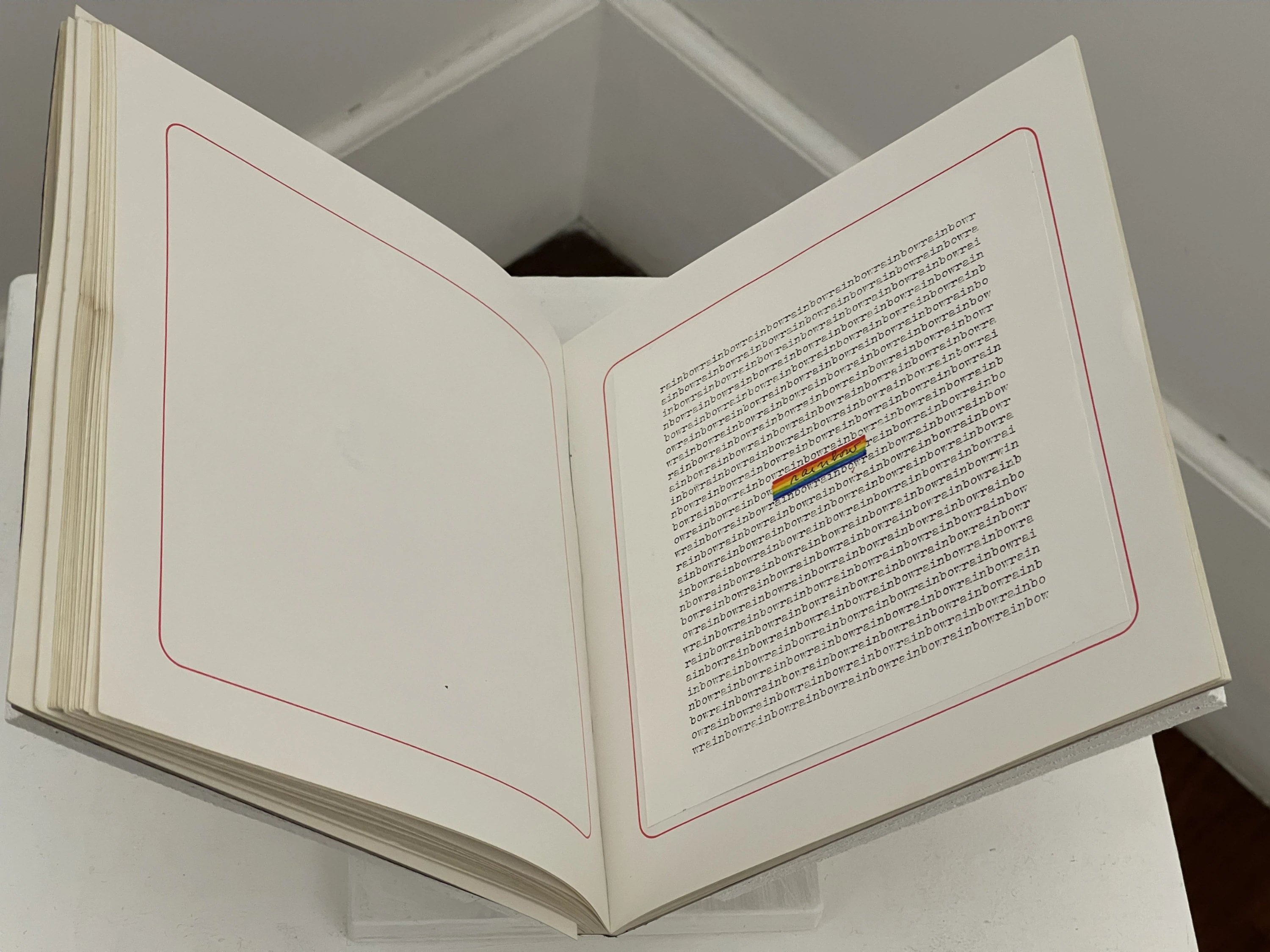
From the very beginning, Danon also devoted herself to writing poetry, producing various artist’s books and finding her optimal dimension in visual poetry. As a testimony of her writing activity, Poesie nel quadrato [Poems in the Square] is definitely her most emblematic book. Published in 50 copies in 1973, it contains five poems graphically arranged in space – in a square, to be precise – in which the artist removes the spaces among the words and the lines, making the text difficult to read and thus expressing her clear intention to blur the difference between writing and image, the sense of words and their appearance.
After her short painting period, Betty Danon goes back to the collage, but the new switch is directly connected with her previous production, because for these new works she uses scraps of Scotch tape stained by the residues of grey-blue acrylic which had previously been used in tracing the lines in the paintings. The result consists of works in which small portions of sky appear in the alternation of parallel segments: the Finestre di Cielo [Windows Of Heaven] are works in which the mimesis between art and reality is generated through a process of randomness, which perfectly matches the intent of the artist whose work now undergoes a process of abstraction that will become more and more extreme. The lines and shapes of that geometry that had characterized the artist’s first works are reduced to the essential: “As time goes by, the two symbols, the circle and the square, become thinner, until only the centre is left of the circle and only the side is left of the square: they are reduced to DOT-LINE, two minimalist elements that will adopt me.
I enjoy reducing everything to a dot and line. For example, I modify a name to reduce it to “dot and line,” so all the names appear the same, just as all the matter they are made of can be traced back to a few essential elements.”
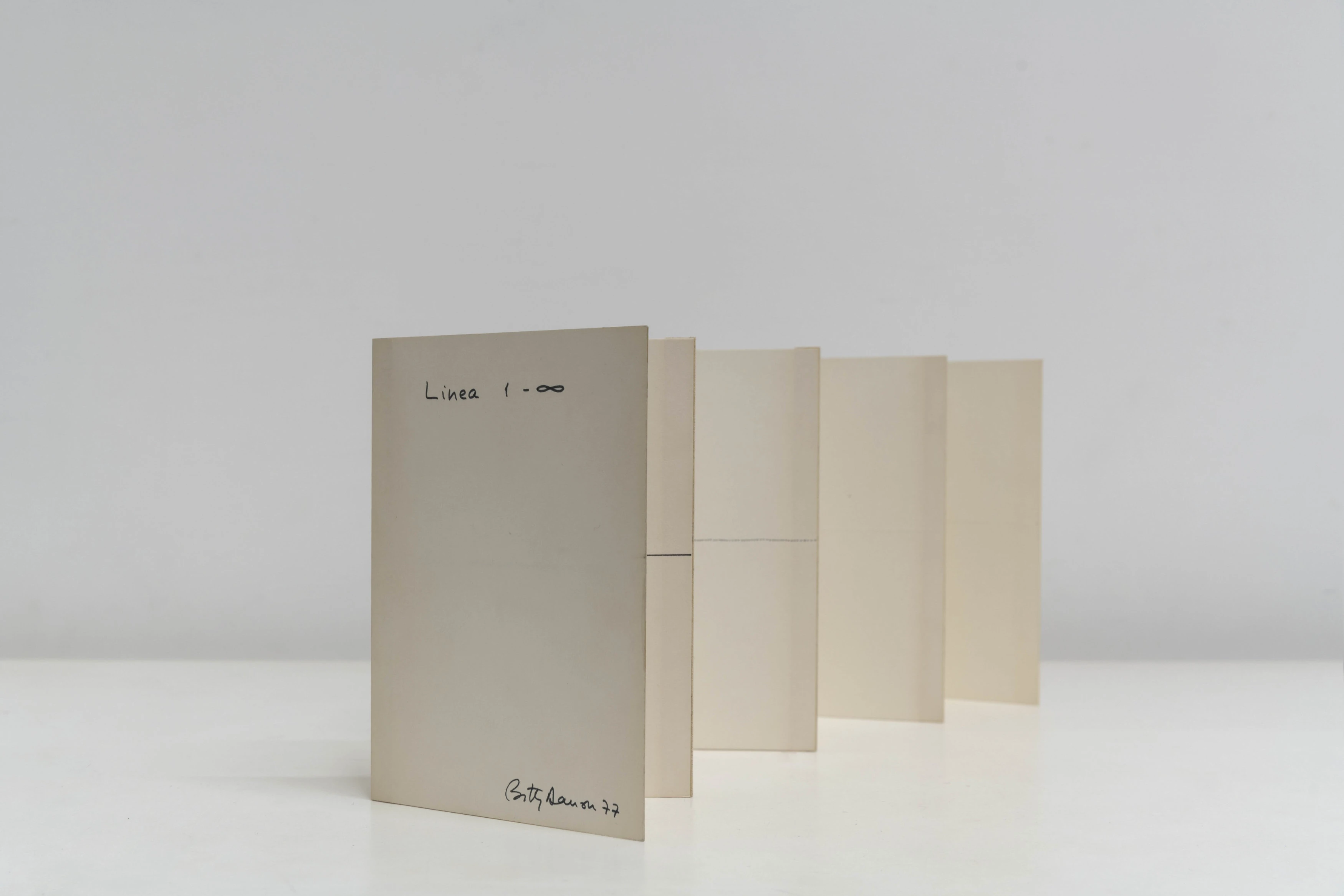
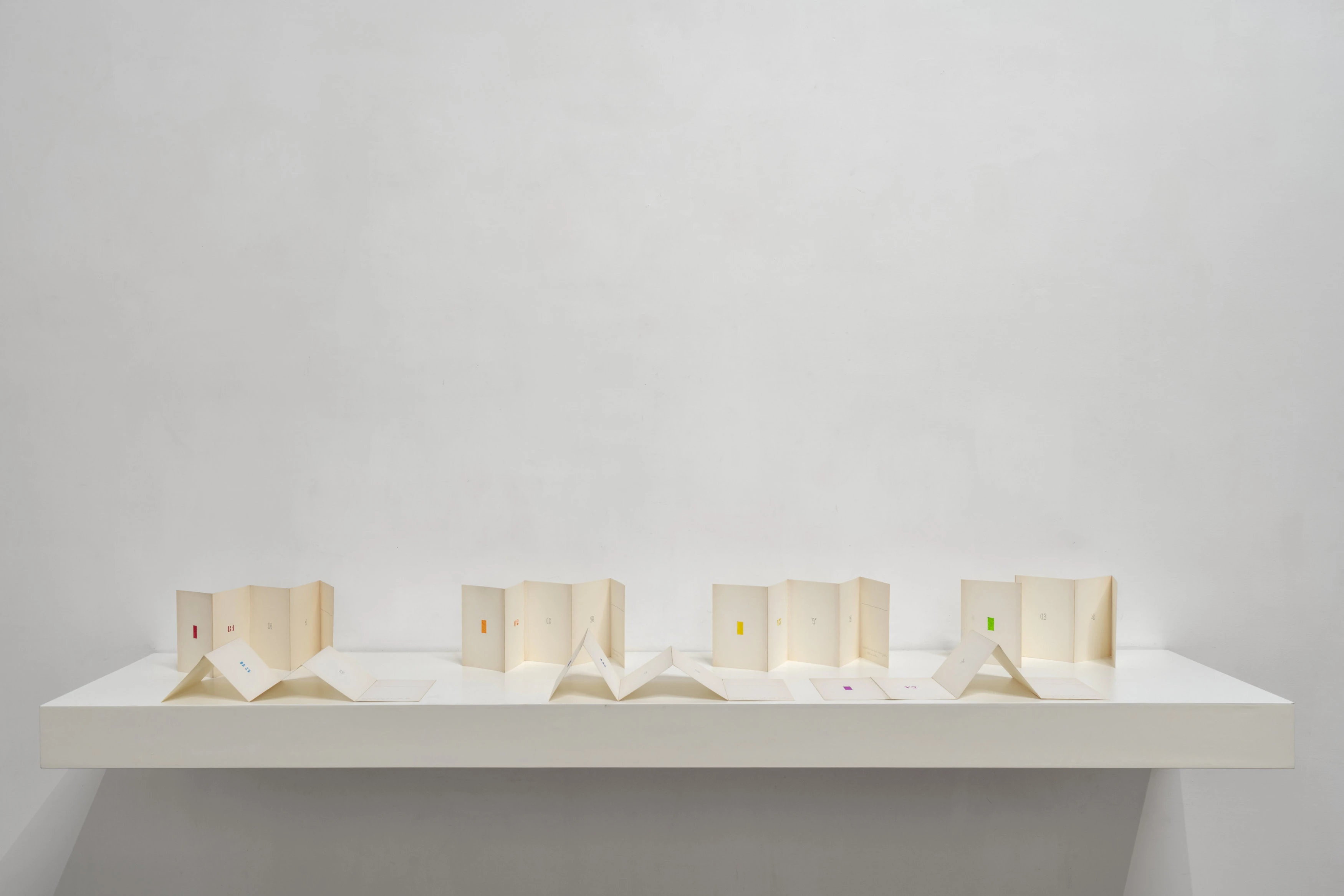
The DOT-LINE theory culminates in an artist’s book of 1976 in which Danon collects some of the possible compositions in which the dot and the line become apparent, starting from a tautology found in a page, where tracing a line, the artist writes the word “line.” Punto – linea [Dot – Line], is considered Danon’s most important book, because, albeit in an extreme graphic synthesis, it contains the most decisive aspect of her poetry.
In the artist’s 1975 poetic declaration we read: “To express myself I use the line as a basic element, understood as a dynamic psychic force.” And this is the intuition that leads Betty towards the musical staff. Not by chance, the staff is associated with the line, while the note is associated with the dot. Thus, in the seventies Danon’s research on the sign and the word continues to generate analogies and works that get increasingly closer to the border between abstraction and rarefaction.
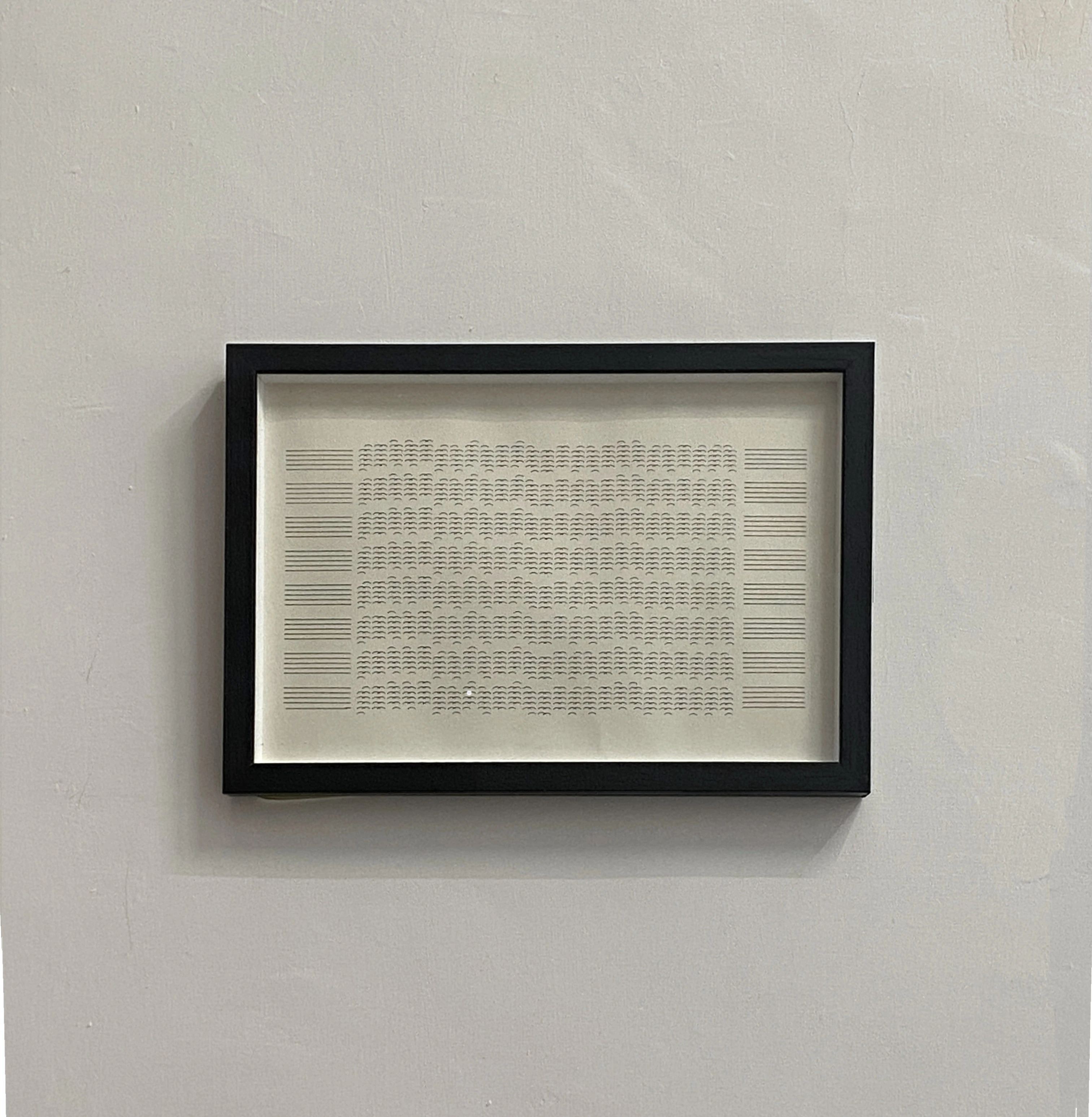
This is the moment of the asemantic scores, works of great lyrical emphasis in which we already see the concept prior to the “abstract scores.” Betty Danon says that of her experiences with collage and geometric painting she had kept the dot and the line as primary elements that synthesized all forms and, poetically, even the whole universe. At one point, she transforms the line into a musical line and the dot into a note, starting to work using the music staff as a basis. She puts tracing paper over staff sheet and then handwrites with a nib and white ink: the overlaps give the impression of depth, creating shadows that look like echoes at the same time.
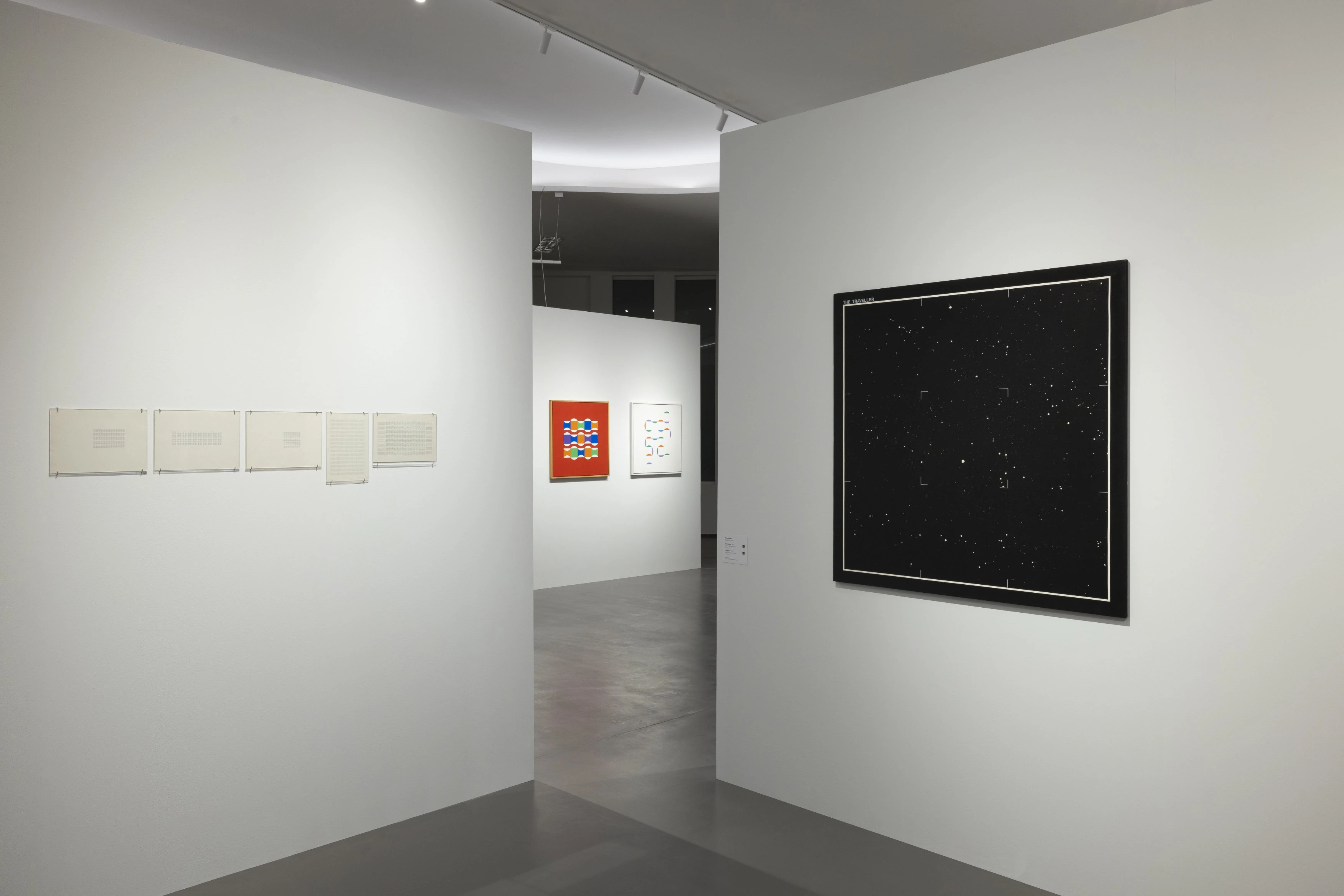
These are the Partiture Astratte [Abstract Scores], with which Betty Danon becomes known on the international scene. Mysterious works in which art is not only looked at but listened to. The Partiture Astratte are the synthesis of a geometric fixity given by the lines of the staff and the lyrical fantasy rendered through a gestural experience made of swift but precise and lively movements.
“They were simulacra of writings drawn on the staff and showed a certain fluidity and apparent coherence. I considered them as an expression of an interior dynamic, spontaneous and absolutely inimitable.” (Betty Danon)
Between 1969, the year her first works date back to, and 1979, Betty Danon participated in important institutional exhibitions, such as Magma, Rassegna Internazionale di donne artiste [Magma, International Exhibition of Women Artists] (1977), conceived and created by Romana Loda at the Museo Castelvecchio in Verona, the first national collective exhibition presenting the Partiture Astratte. In 1978, Danon was invited to participate in Materializzazione del Linguaggio [Materialization of Language] at the Magazzini del Sale within the Venice Biennale.
The exhibition, curated by Mirella Bentivoglio, hosts the performance Memoria del segno sonoro [Memory of the Sounding Sign], in which the artist, sitting at a desk, writes with mechanical movements on the sheet along the staff. Using invisible ink, she writes text that is not readable. But at a later moment, Danon passes a single blue brushstroke on the score. The gesture is revealing because the blue colour reveals what had been written with the invisible ink.
The performance is characterized by a precise sound, that of writing on the music sheet and of the paintbrush stroke of the revealing brush. In addition to the audio recording, what remains of Memoria del segno sonoro is the series of scores characterized by the unmistakable blue stroke in which we catch a glimpse of a faint “desemantized” writing. The development of a language on the border between sound and figurative would result in Betty Danon taking part in 1979, as the only Italian artist, in the Sound exhibition organized at PS1 in New York, still remembered as one of the first major retrospectives dedicated to the association between image and sound.
1979 is also the year of Danon’s meeting with Guido Le Noci to which she shows her abstract scores, which are deemed too conceptual and not compatible with the program of the gallery, which at the time was actually closed “for lack of artists.” Betty was always in contact with artists from all over the world, and was looking for a common thread that could in some way bring them together.
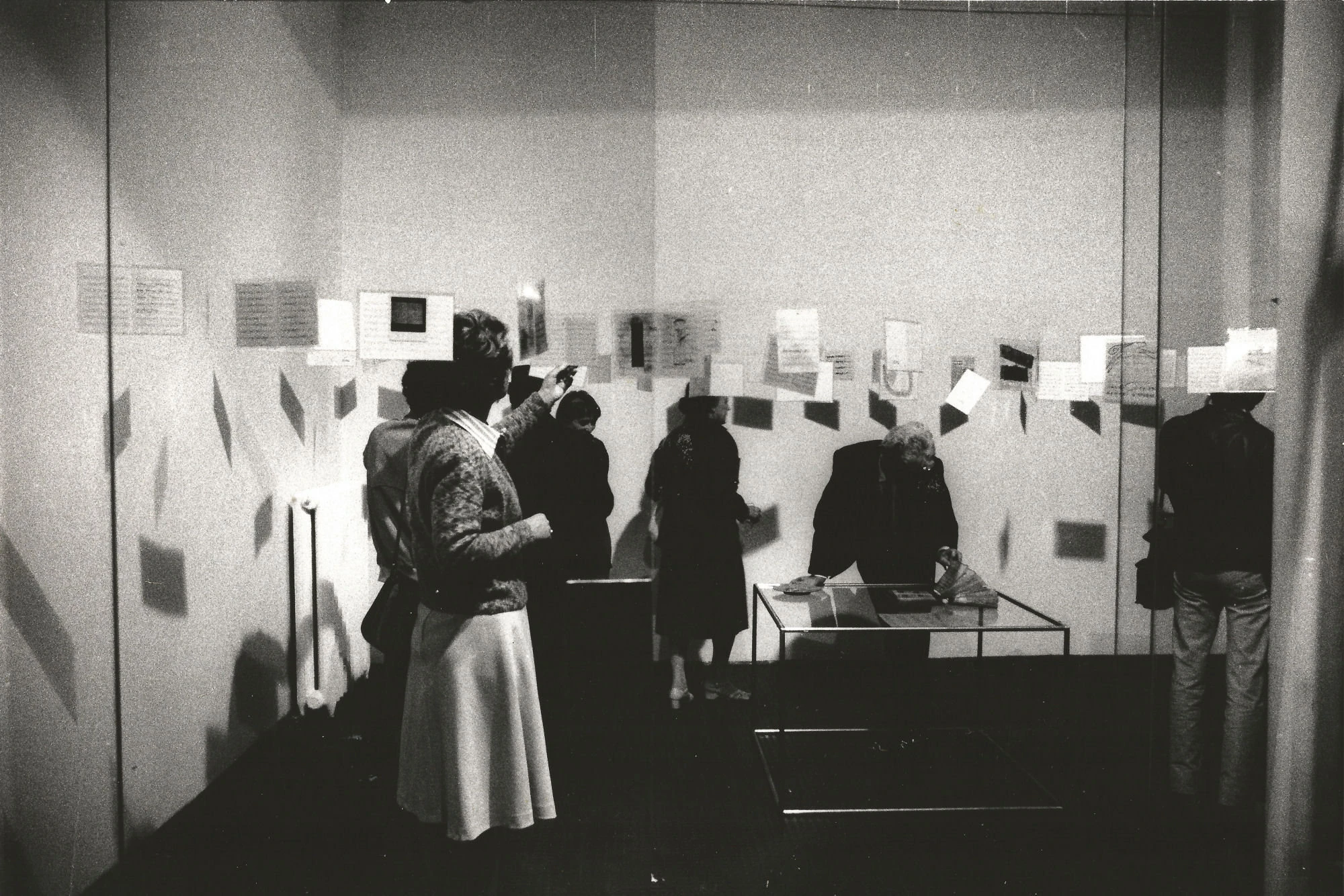
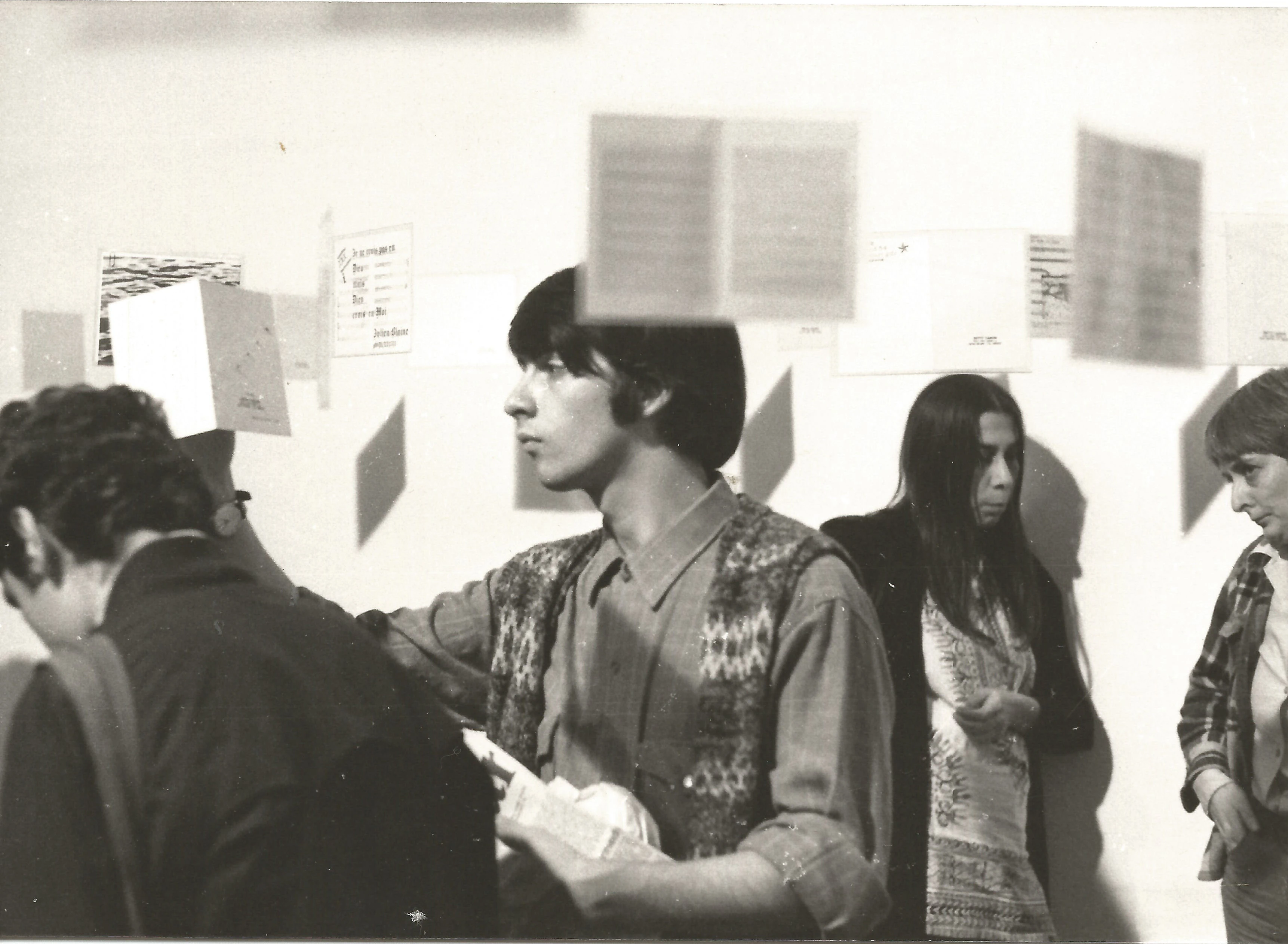
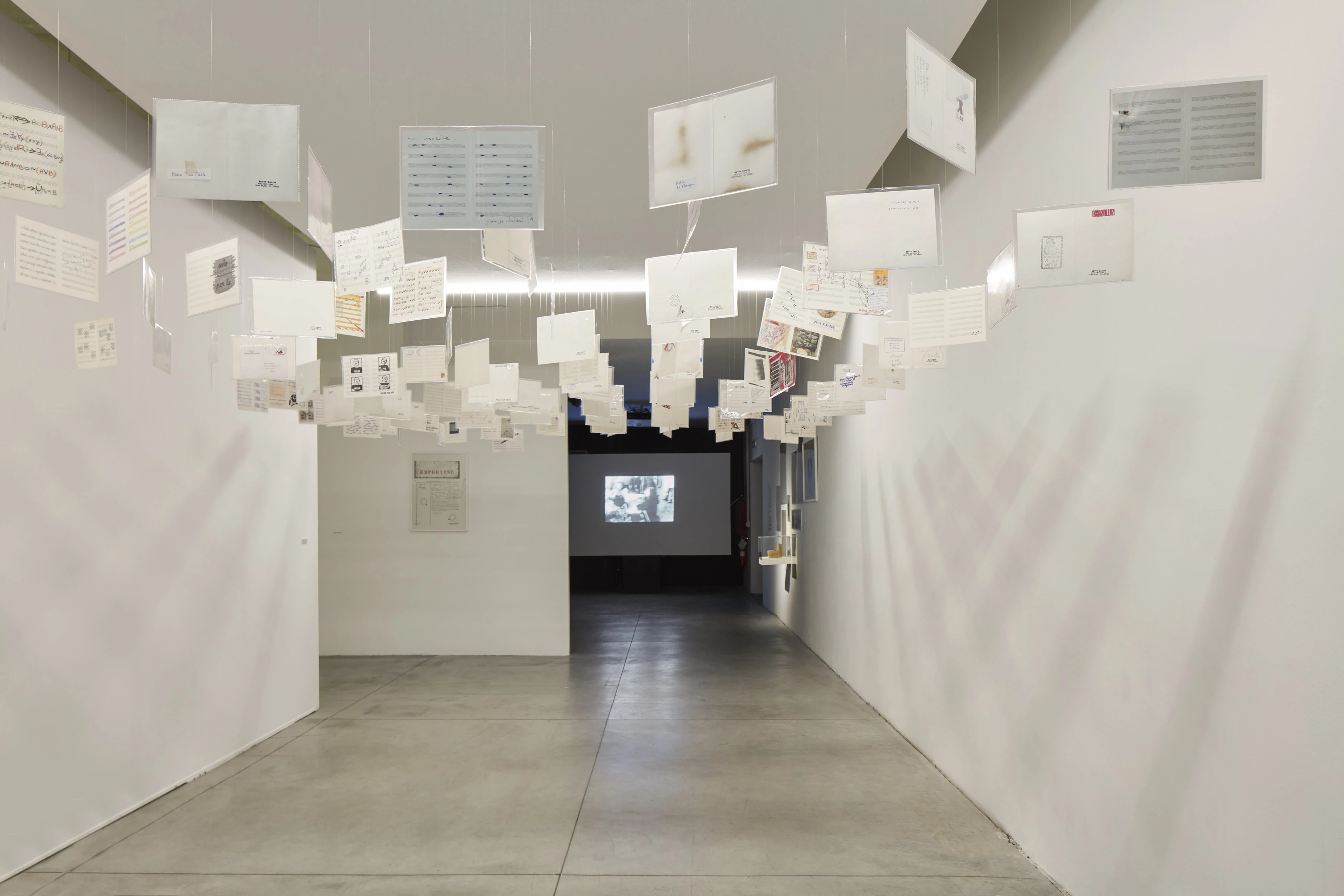
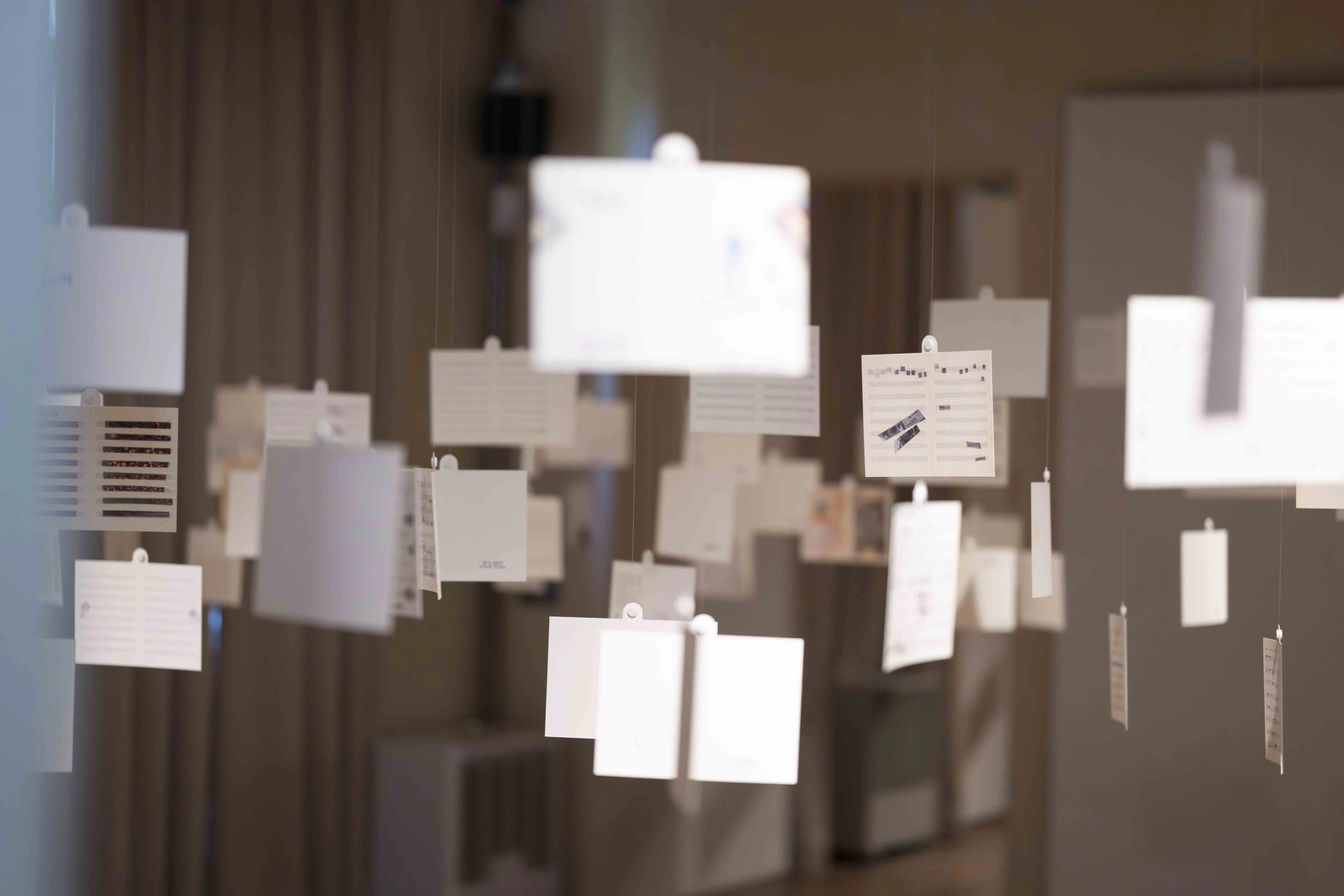
Thus she decided to make a collective work by sending cards on which she had drawn sequences of staffs. Artists would receive this score with an invitation to use it to create a piece, and then, if they wished, send it back to the sender. In the space of a few months Betty collected about two hundred pieces that would make up a great collective work entitled Io & Gli altri [I & The Others].
It is an important experience, the first ‘mail art’ one she produced. Guido Le Noci considered Io & Gli altri an extraordinary work and decided to exhibit it in his Apollinaire Gallery. But this experience did not go down well because many of the artists involved accused Danon of having exploited this collective action for lack of personal inspiration.
In a subsequent letter, the artist declared all her sadness and concludes by declaring that she wanted to leave the “wonderful art world” forever. She stopped exhibiting publicly, but continued to work relentlessly until the last day of her life. As an artist, she was not isolated, because she kept in contact with artist friends from different parts of the world and her studio became a stimulating place of meeting and experimentation.
Danon produced an incredible body of mail art, because in fact her letters to and from her artist friends include drawings, collages, poems and works of various kinds that form a huge archive, now kept at the Mart in Rovereto.
Betty Danon passed away in Milan in 2002.