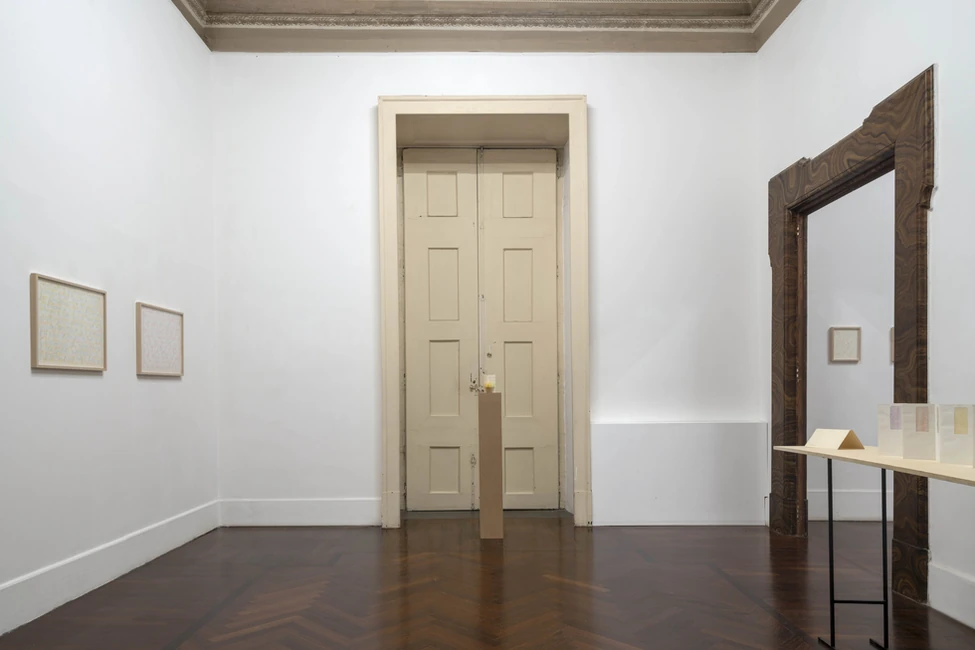
Galleria Tiziana Di Caro announces the fourth exhibition in its premises featuring Betty Danon, entitled For The Grey Days Only, opening on Friday 2nd December 2022 at 19:00.
Betty Danon’s career as an artist begins at the end of the Sixties: her debut is with geometric collages, which will be followed by a brief but exclusive pictorial interlude in 1973. She goes back to collage with Finestre di cielo [Sky Windows], which already show a process of synthesis taking place and which in turn will lead to the theory of the dot and line. The dot and the line are the key elements of music notation and in fact Danon’s Partiture astratte [Abstract Scores] represent the culmination of this research which, starting from geometry, tends to rarefy to the point it represents sound.
1979 is a crucial year for Danon. Following the Io&gli altri [I&The Others] exhibition at Guido Le Noci’s Galleria Apollinaire, the artist withdraws from the art world, continuing production but without exhibiting, and moving away from a system in which she sees no place for herself.
We need to take a small step back and return to 1976 to find the object of the For The Grey Days Only exhibition, i.e. what Betty Danon called Rainbowland which is not only a series of works, but also a human and spiritual dimension arising from an act of love and friendship that the artist herself describes as follows:
My pen pal Amelia Etlinger suffered from night panic attacks and insomnia. To lighten things up I wanted to invent for her a special ‘fairy tale’ set in an imaginary country over the rainbow that I called Rainbowland. This story started off well, but I was never able to finish it. Instead, I sent my friend the Rainbowland map to explore.
Betty Danon never met most of her long-time pen pals with whom she exchanged works which ended up creating an incredible collection of mail art. In the process, intense relationships were built, inspiring Danon to invent a world that she called Rainbowland, originally for her friend Amelia Etlinger, whom she never met but this didn’t seem to matter.
In 1976 Danon writes a story that takes the form of a fairy tale for Amelia. Over time the ‘concept’ develops to become a poetic symbol, an otherly place, an alternative to reality: “the pretext for climbing over walls and going to play with others.”
In 1980 she created a diary/artist’s book in which she collected postcards, collages, drawings, sentences, all dedicated to Rainbowland. This is where the words “For the grey days only” first appear, giving the exhibition its title and suggesting the therapeutic power of the rainbow, to be used “only on grey days.”
Betty Danon describes herself as a sort of Alice (in Wonderland) living in this imaginary place. To access Rainbowland, citizenship cards are issued, and a map, mail stamps and a rubber stamp, which the artist will use for her works, are produced too.
Writing would remain at the heart of Danon’s production. Alternating between typing and pen writing, the word Rainbowland itself becomes a significant sign: we find it written in various works so that the land of the rainbow is recounted through the constant repetition of its name, like a mantra. Any object can be transformed through the use of the seven colors and therefore everything can be transferred to and from Rainbowland.
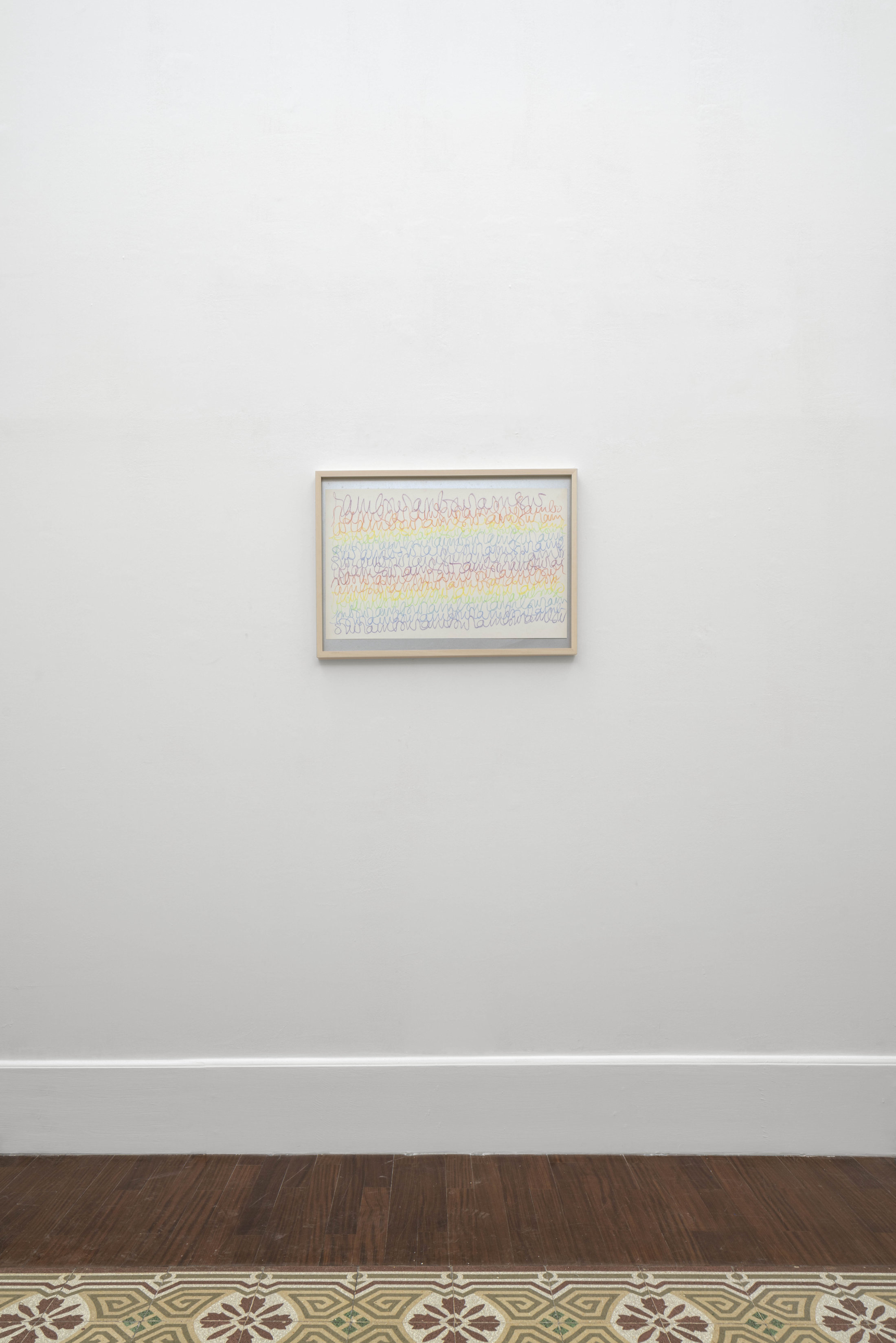
The land of the rainbow brings about a fundamental change in Danon’s language: her works created between ’72 and ’77 are almost all outlined through thick and thin lines. The line games, the asemantic and the abstract scores are works in which the sign is rendered with black or white on soft, monochrome or semi-transparent backgrounds. From 1976 onwards, a delicate chromaticism creeps into Danon’s work in addition to the rainbow. The writing shifts from black and white to color. A writing that seems ‘desemanticized’ but which instead, once decoded, becomes very clear and readable. The series of drawings presented in the exhibition has no title. Each work is made up of sentences that repeat and overlap, generating shifts in the compositional plan. Reading is complicated by the sign that has turned into a scribble, and yet if observed carefully the words are recognizable and distinguishable. They are poetic sentences most often taken from Kahil Gibran that Danon makes her own: they are existential, philosophical or poetic considerations on life and identity. But the writing, albeit complicated, in a further phase tends to become rarefied again and its meaning is no longer recognized. It returns to being automatic writing whose meaning resides only in the spirit of Danon, and we are left only with an enigma, a formal element which is highly intriguing and such as to leave total space for our most intimate imagination.
Betty Danon was a conceptual artist and visual poet. Born in Istanbul, she lived in Milan since 1956. She worked with sound and sign starting from a Jungian symbology, reducing circle and square to two primary elements – dot and line – which evolved in the artist’s future works, in the simulated scores and in interventions on sound and sign and word.
Installation view
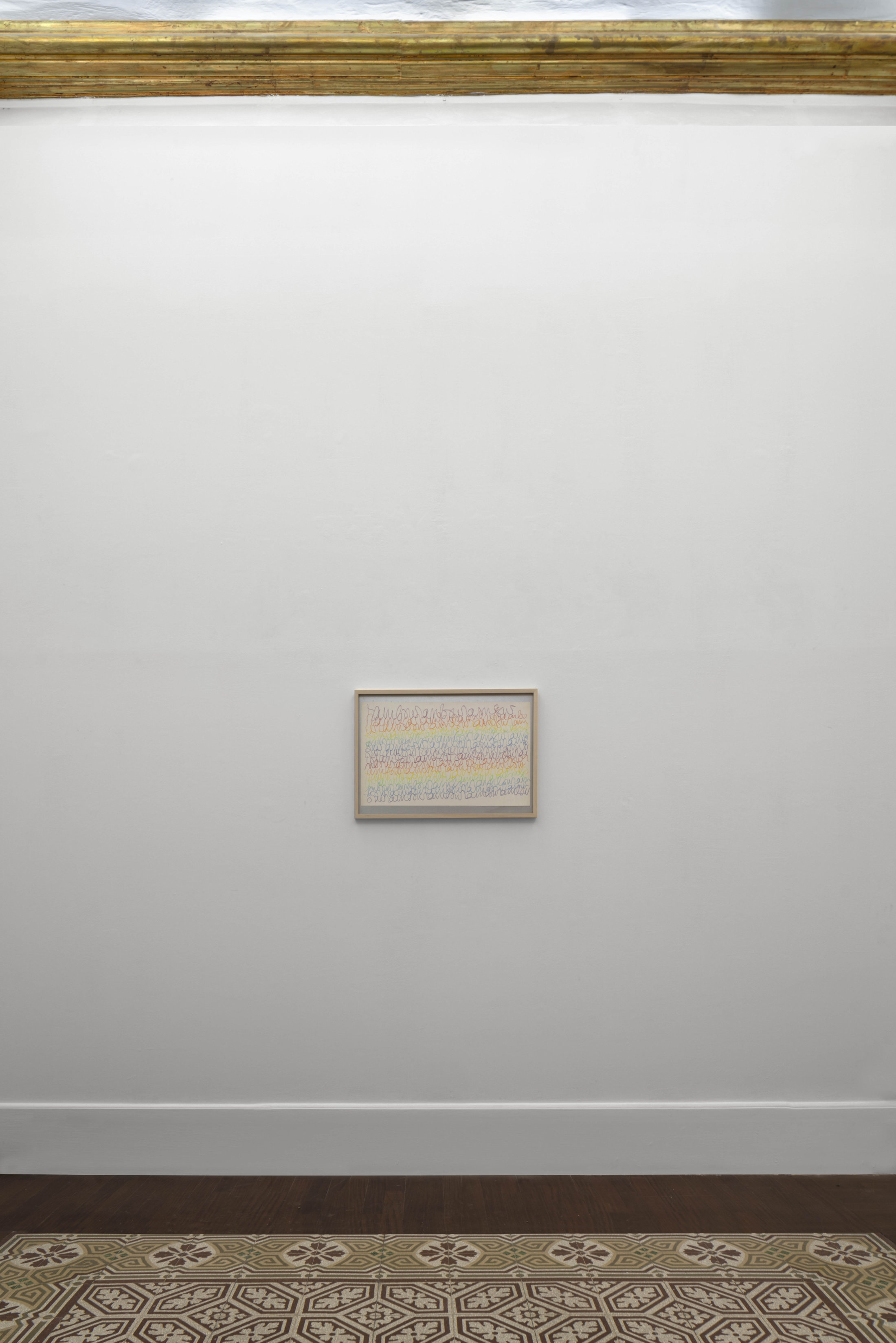
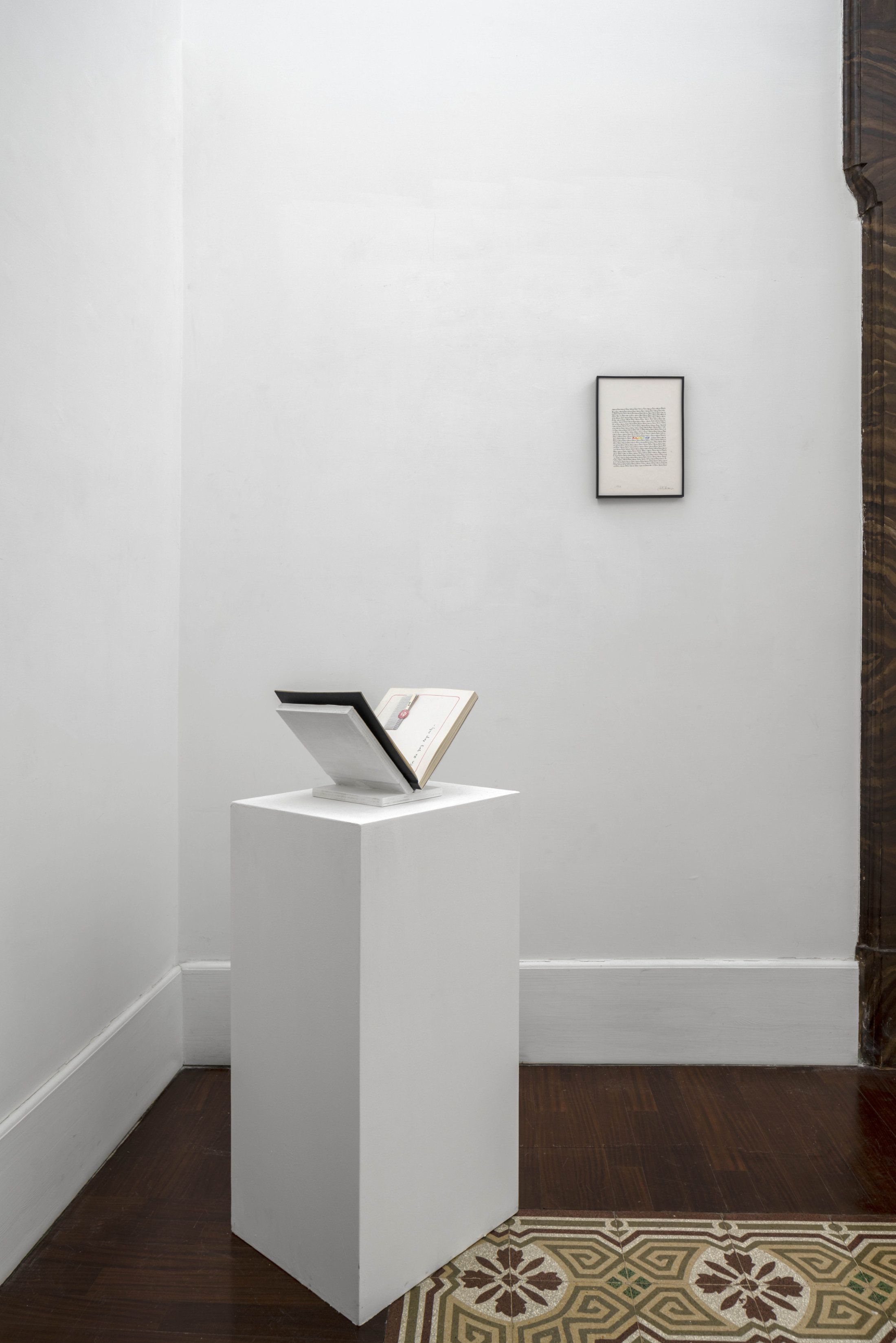
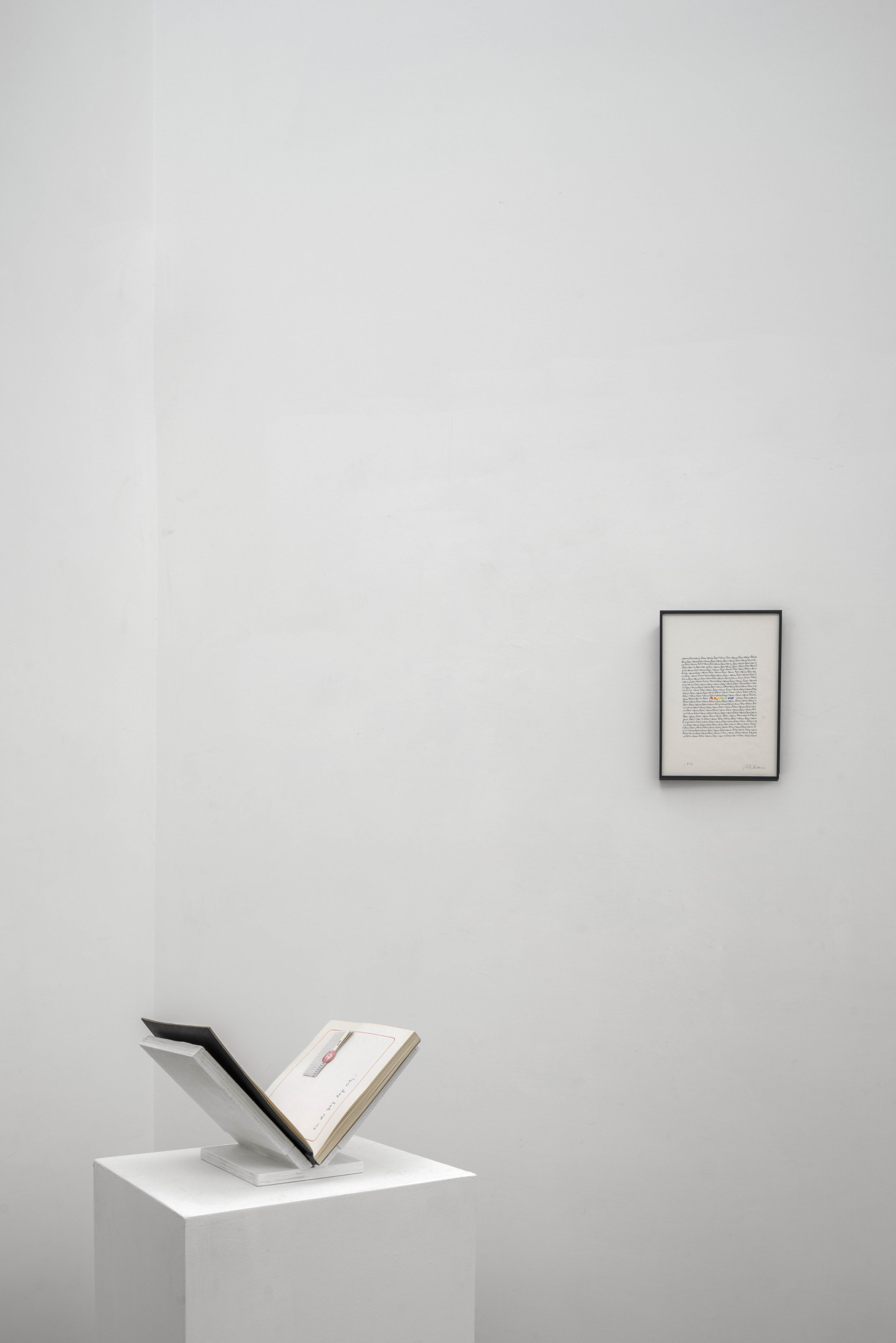
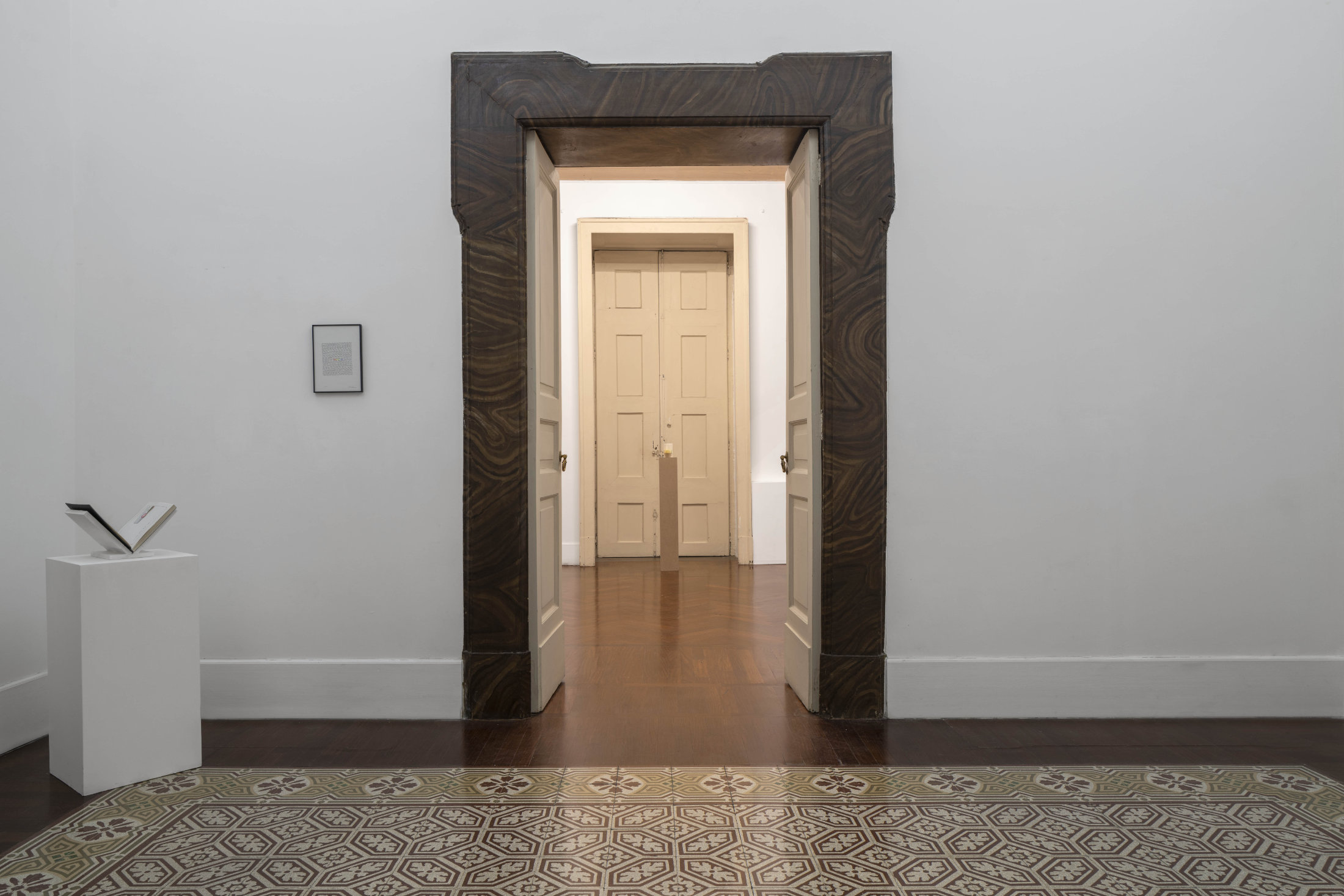
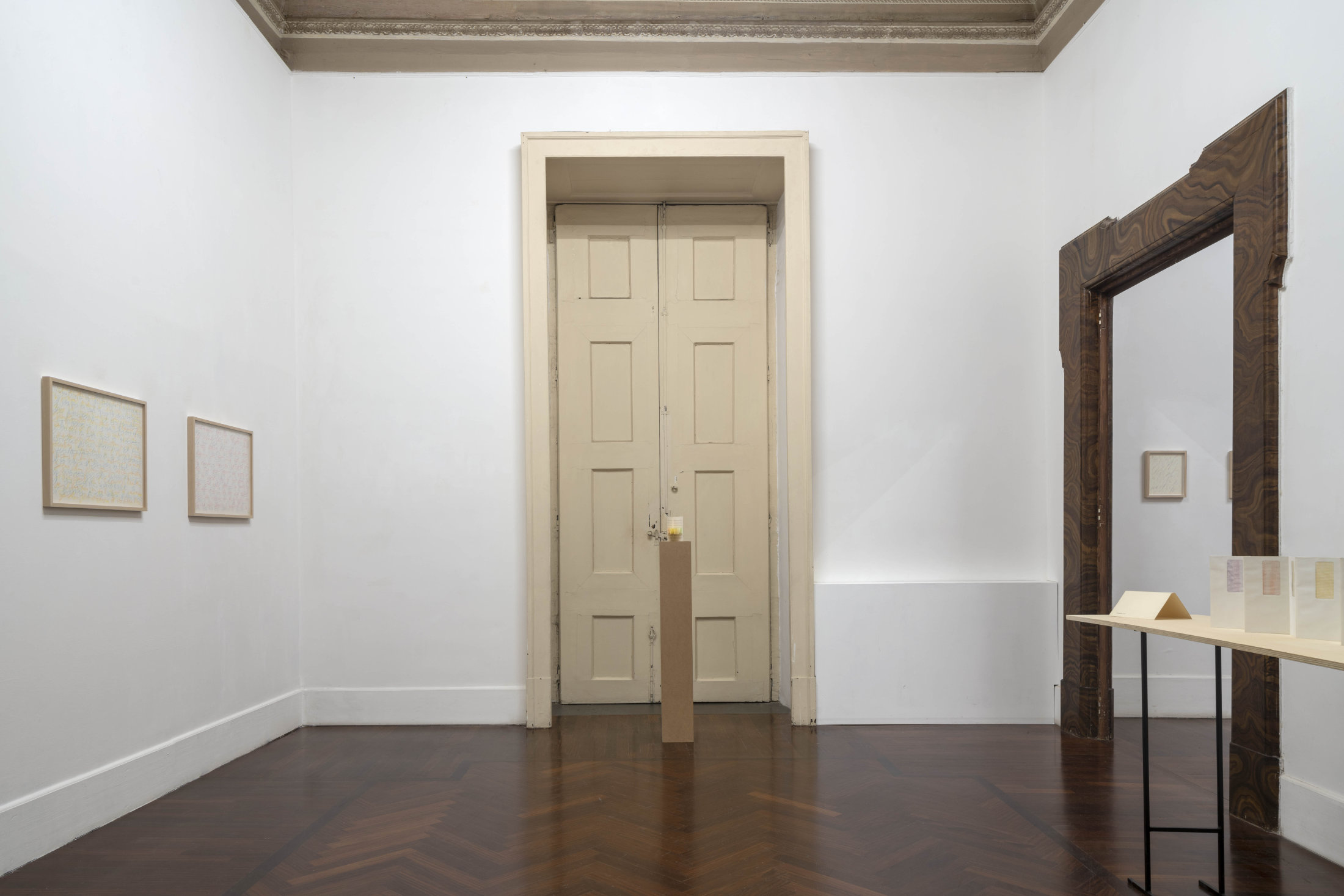
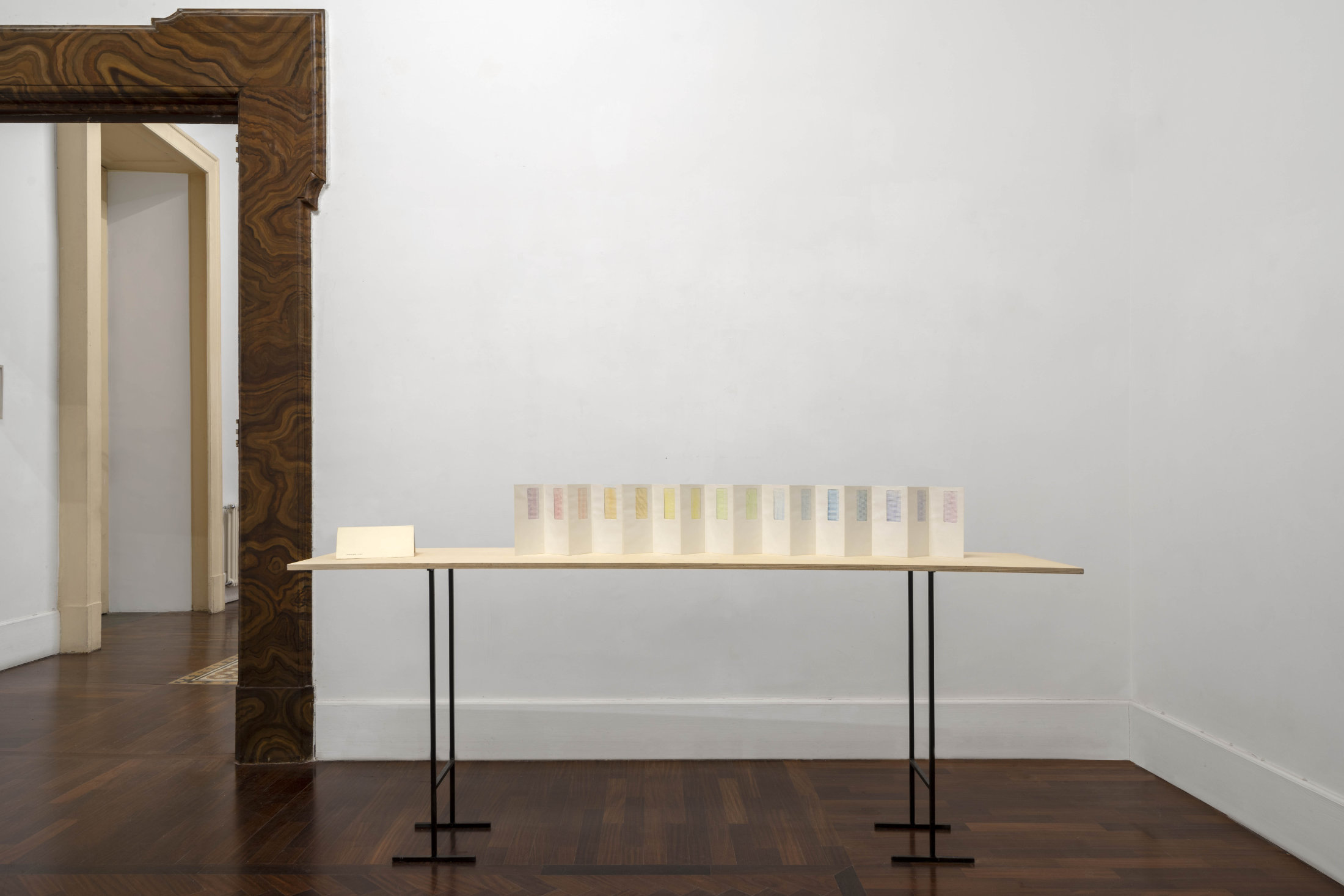
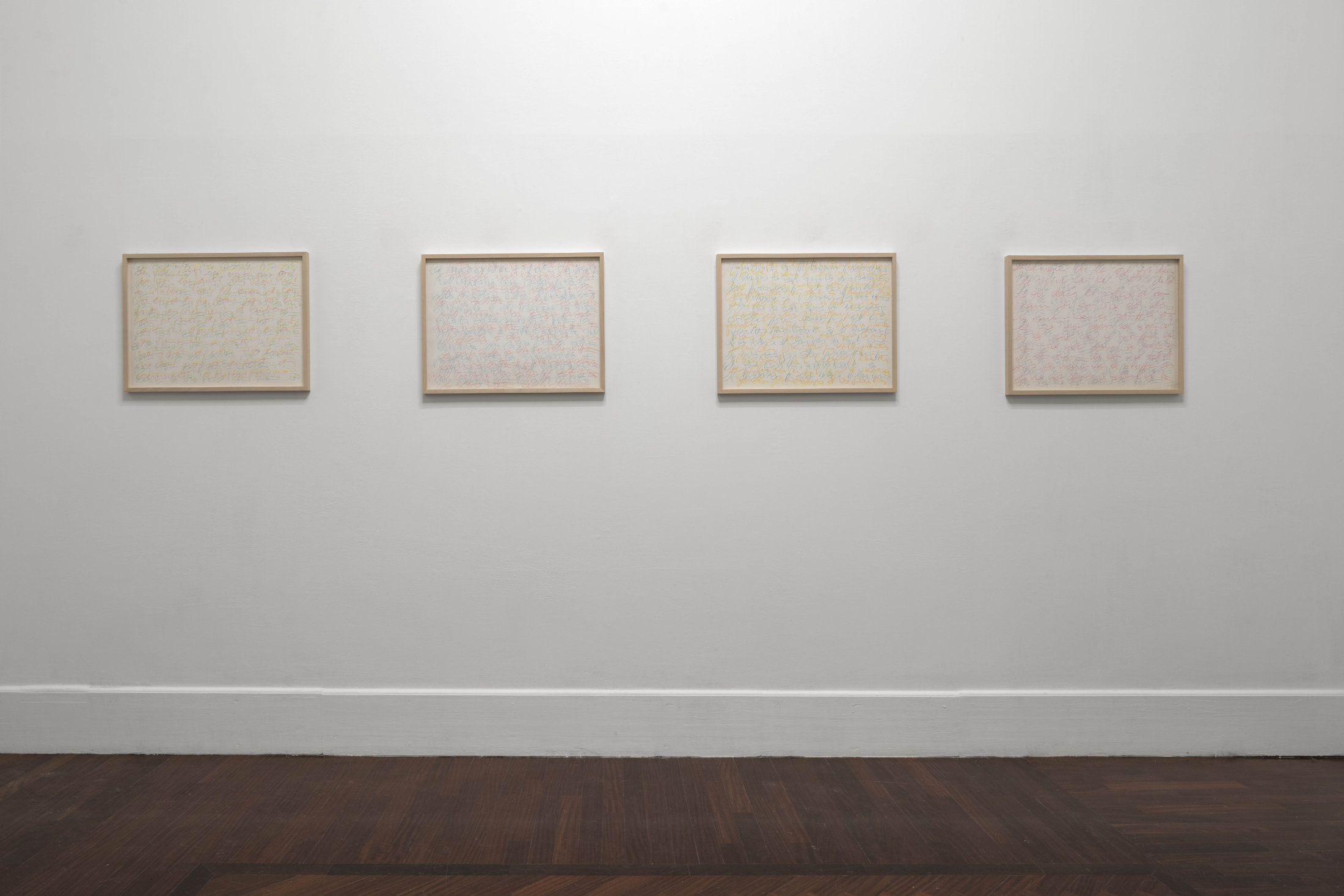
Artworks displayed
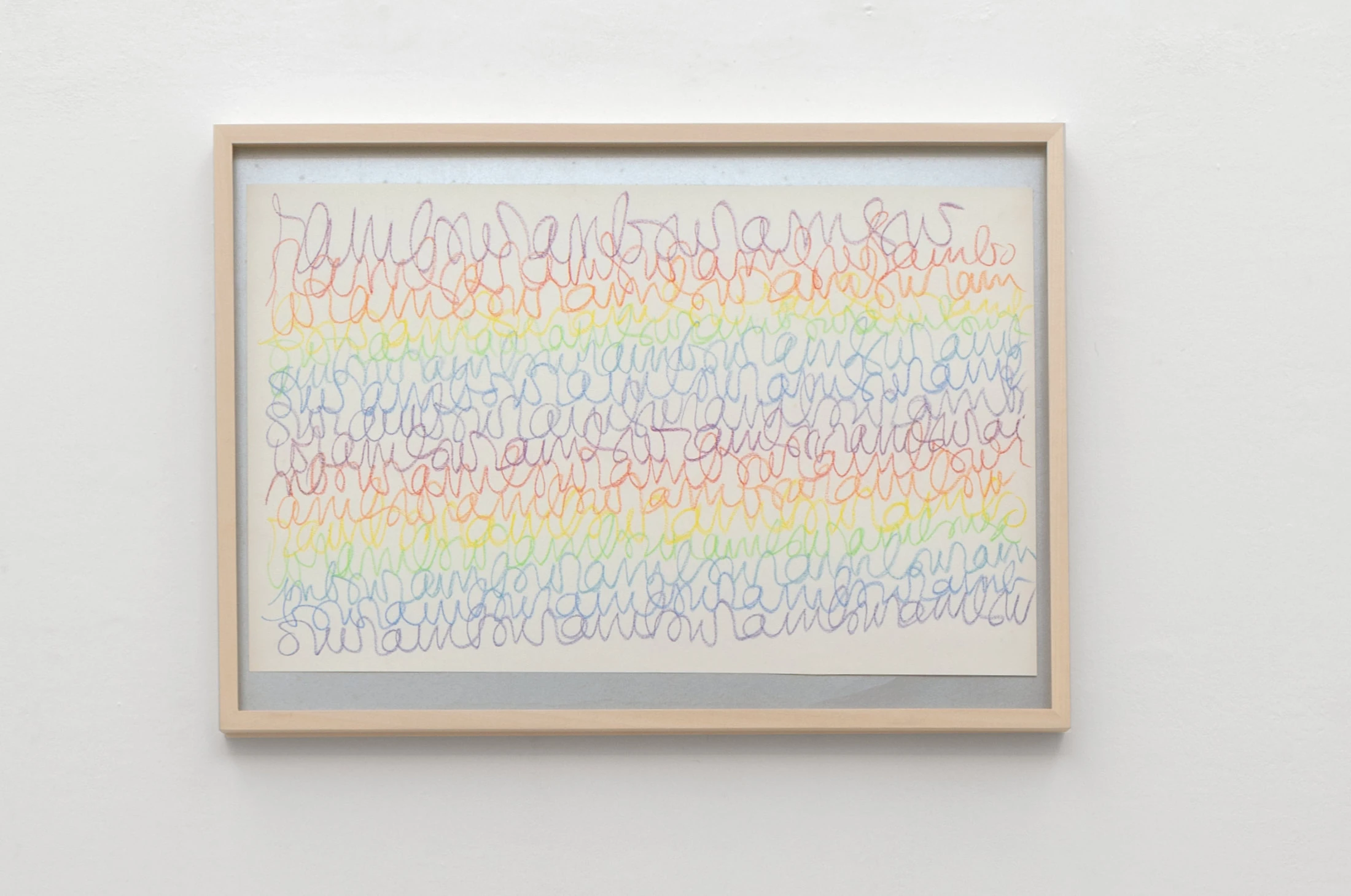
Rainbowland,
1980 ca.,
pastel on paper, mounted on cardboard,
cm 49 x 58
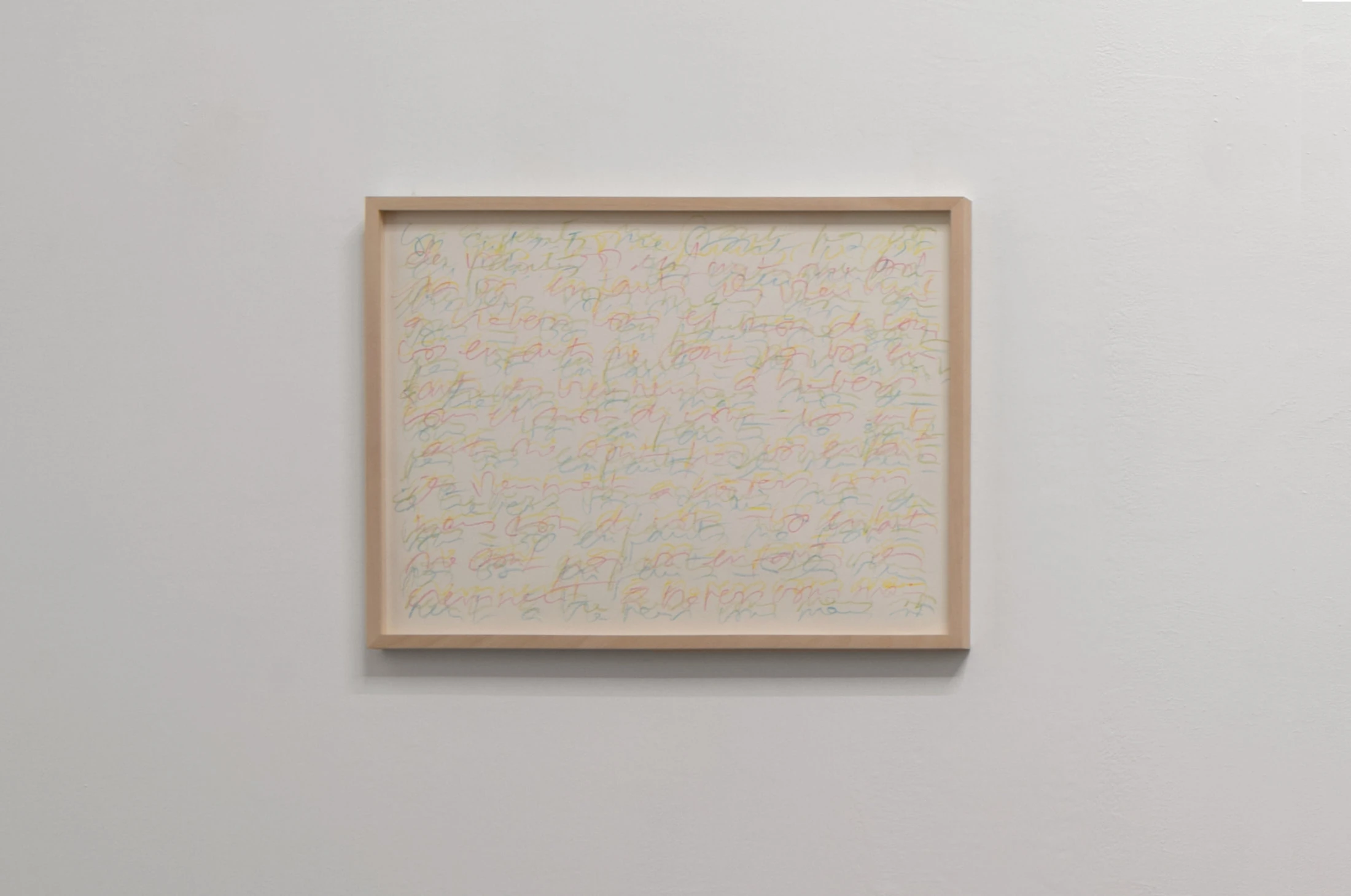
Untitled (automatic writing),
1980 approx.,
pastel on paper,
cm 48 x 67
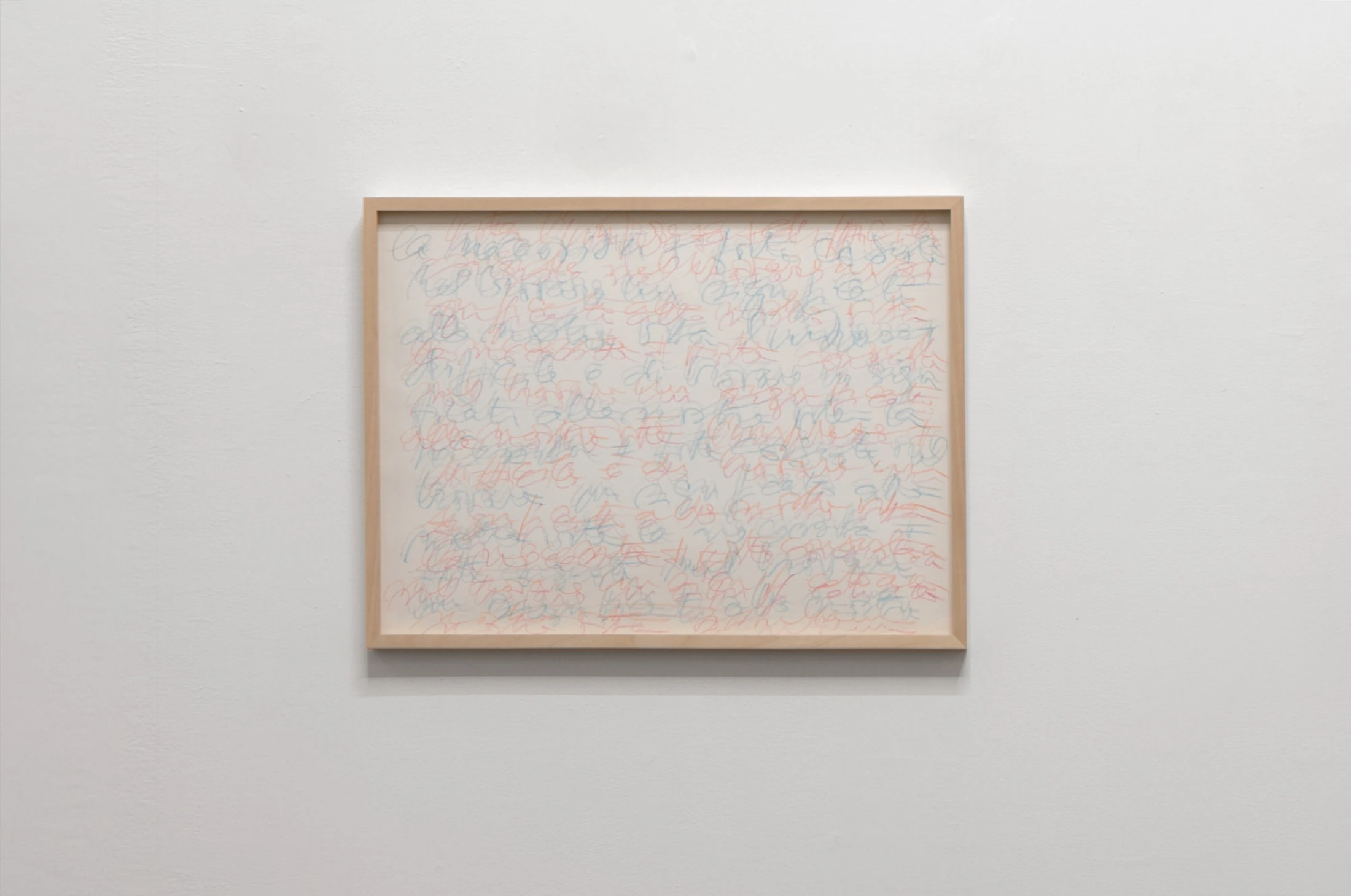
Untitled (automatic writing),
1980 approx.,
pastel on paper,
cm 48 x 67
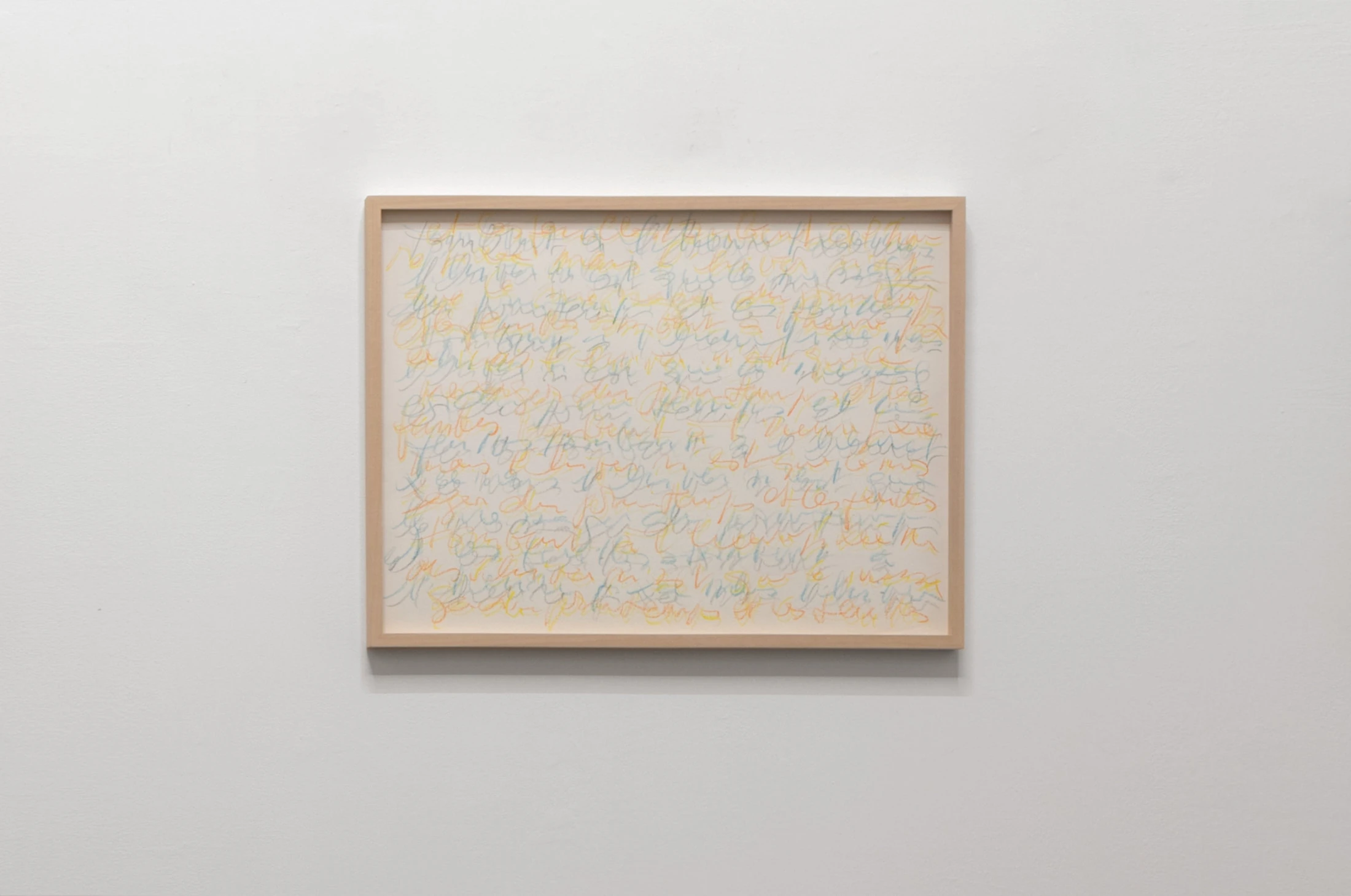
Untitled (automatic writing),
1980 approx.,
pastel on paper,
cm 48 x 67
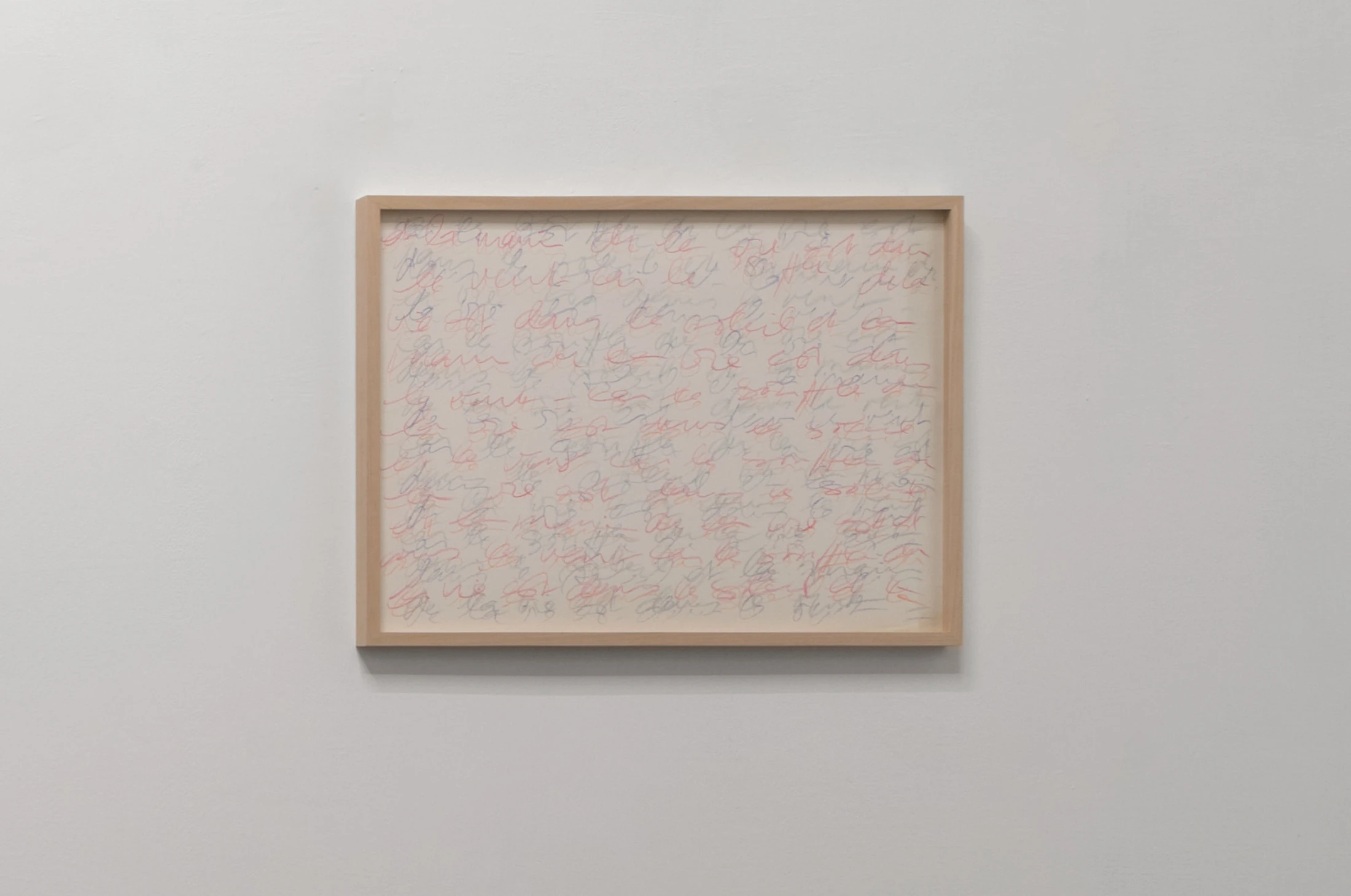
Untitled (automatic writing),
1980 approx.,
pastel on paper,
cm 48 x 67
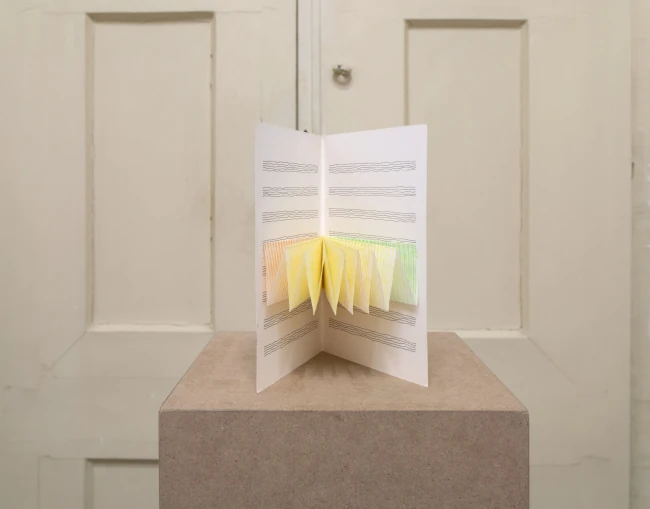
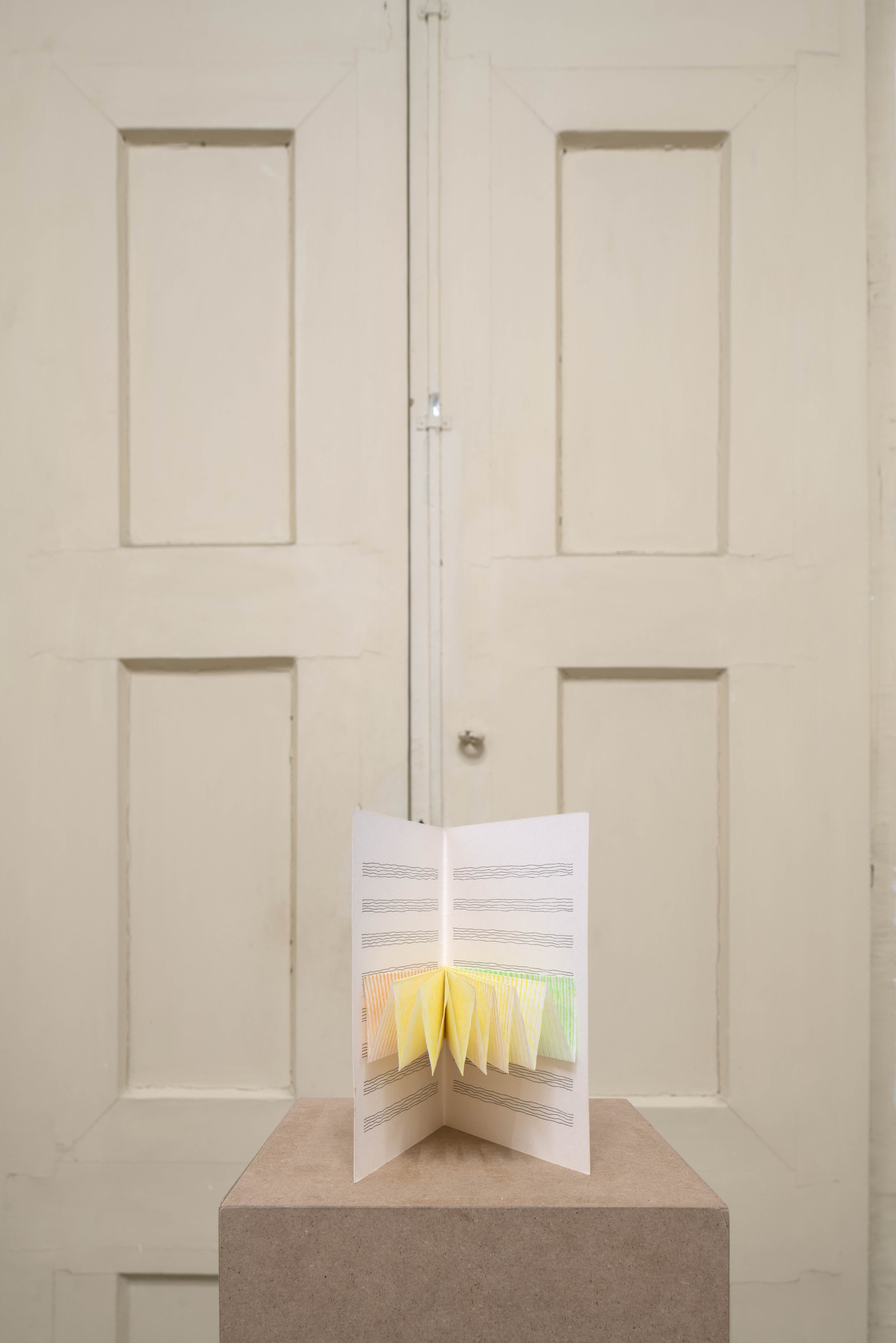
“Rainbow” chord,
1977,
frottage on staffed paper,
cm 15 x 10,3 (chiuso) - cm 10 x 15 x 21
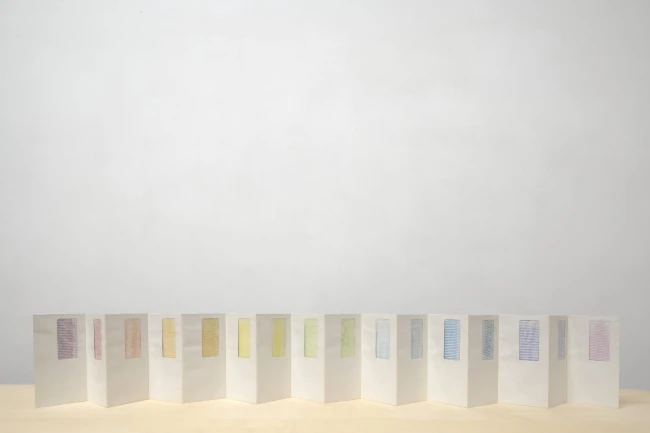
Rainbowland Train,
1978,
leporello, print on paper, colored pencils on paper, envelopes with plastic windows,
16 pages plus cover,
cm 22,9 x 12 x 1,5
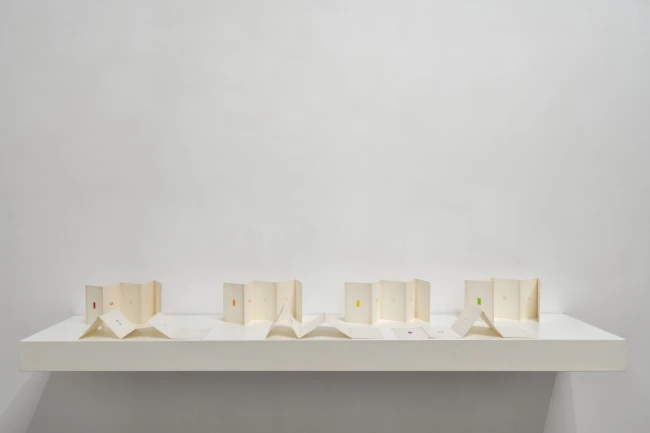
Rainbow Poem,
1978,
installation, 7 leporelli, colored pencils and china ink on paper,
7 items,
14.7 x 52.5 cm (each)
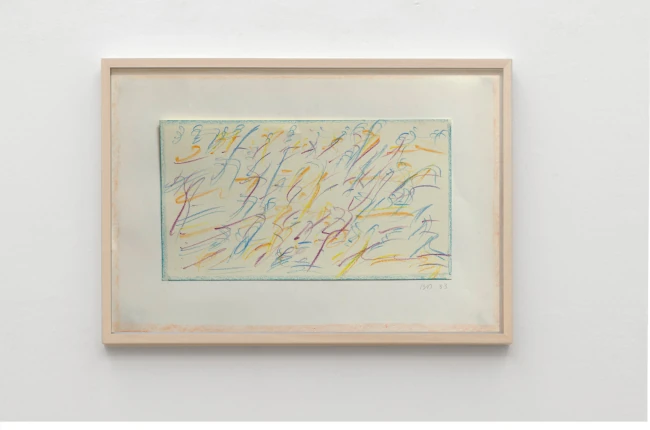
Untitled (Thoughts in the mirror),
1983,
pastel and collage on paper,
cm 23 x 35
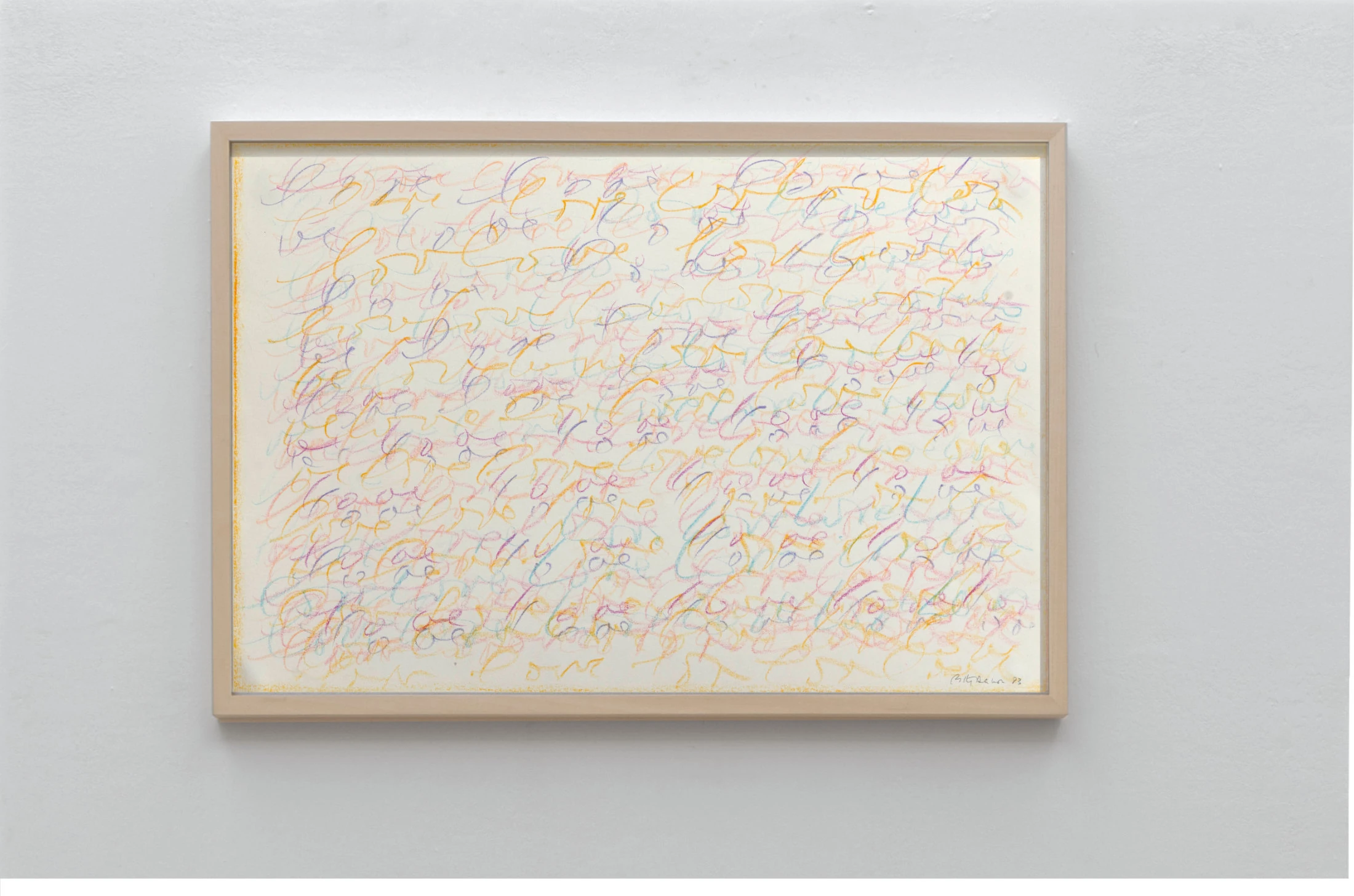
Untitled (automatic writing),
1983 approx.,
pastel on paper,
cm 48 x 67
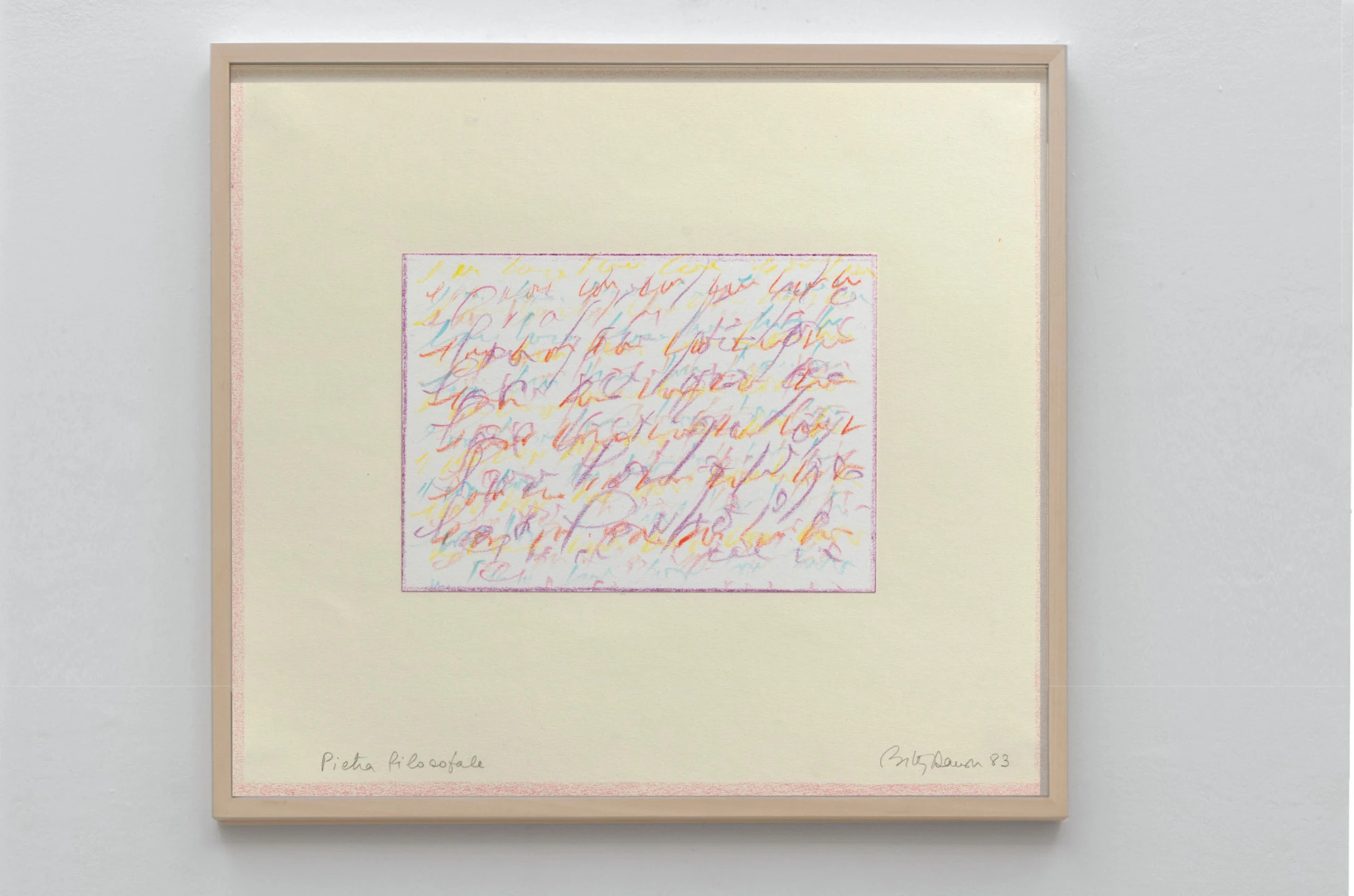
Philosopher's Stone,
1983,
collage and pastels on paper,
25.8 x 22.8 cm (with passepartout), 10.5 x 14.8 cm (sheet)
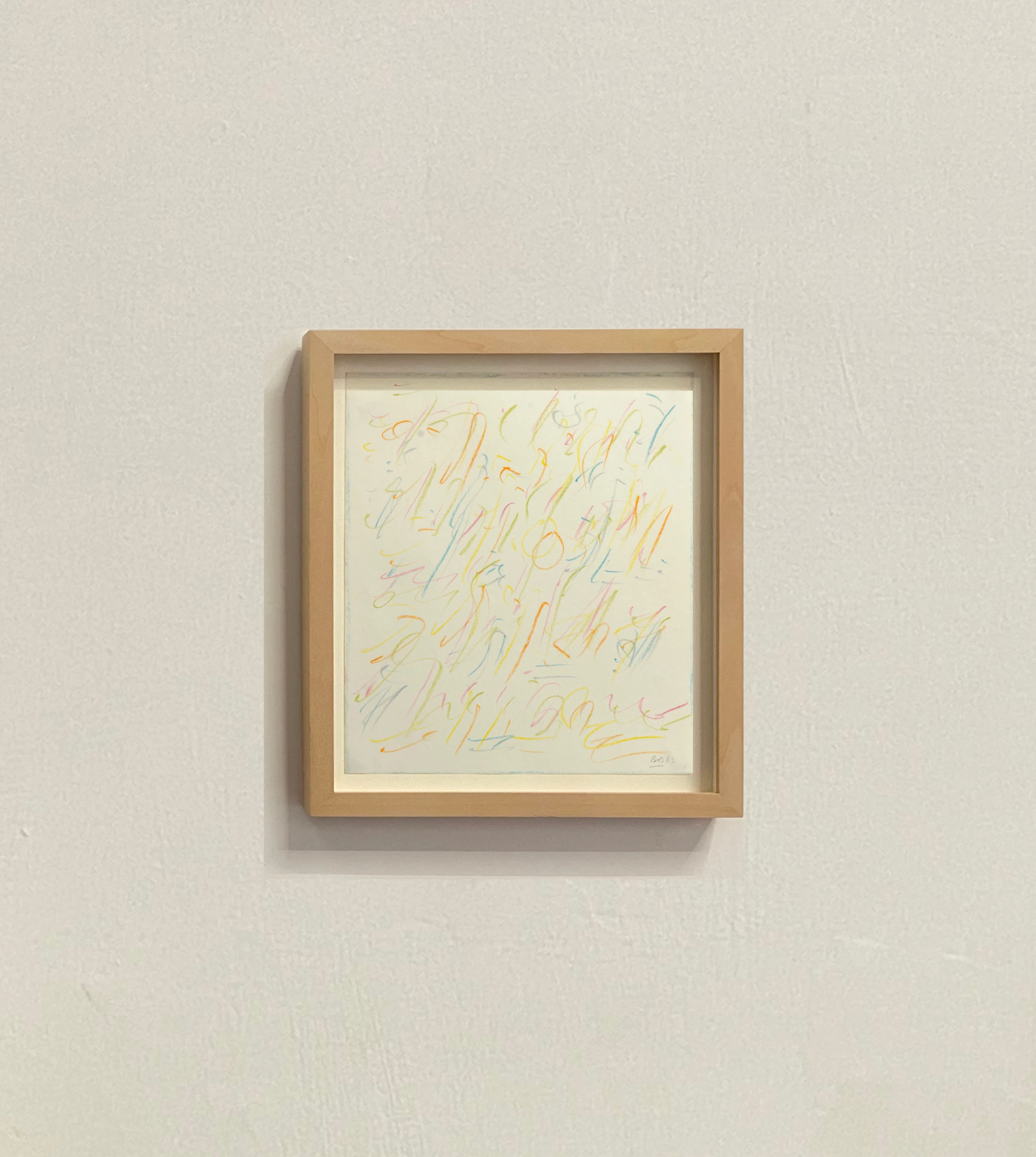
Thoughts in the mirror,
1983,
pastel on paper,
25.8 x 23 cm
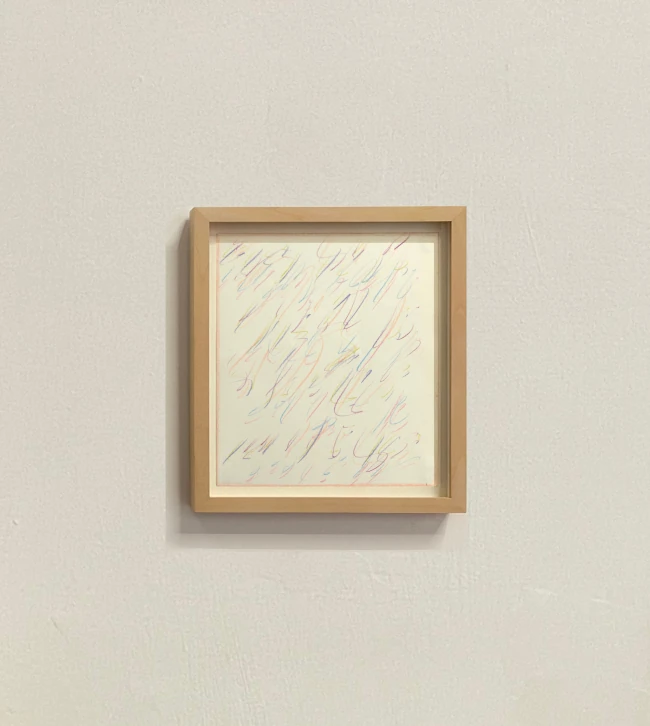
Thoughts in the mirror,
1983,
pastel on paper,
cm 25,8 x 23
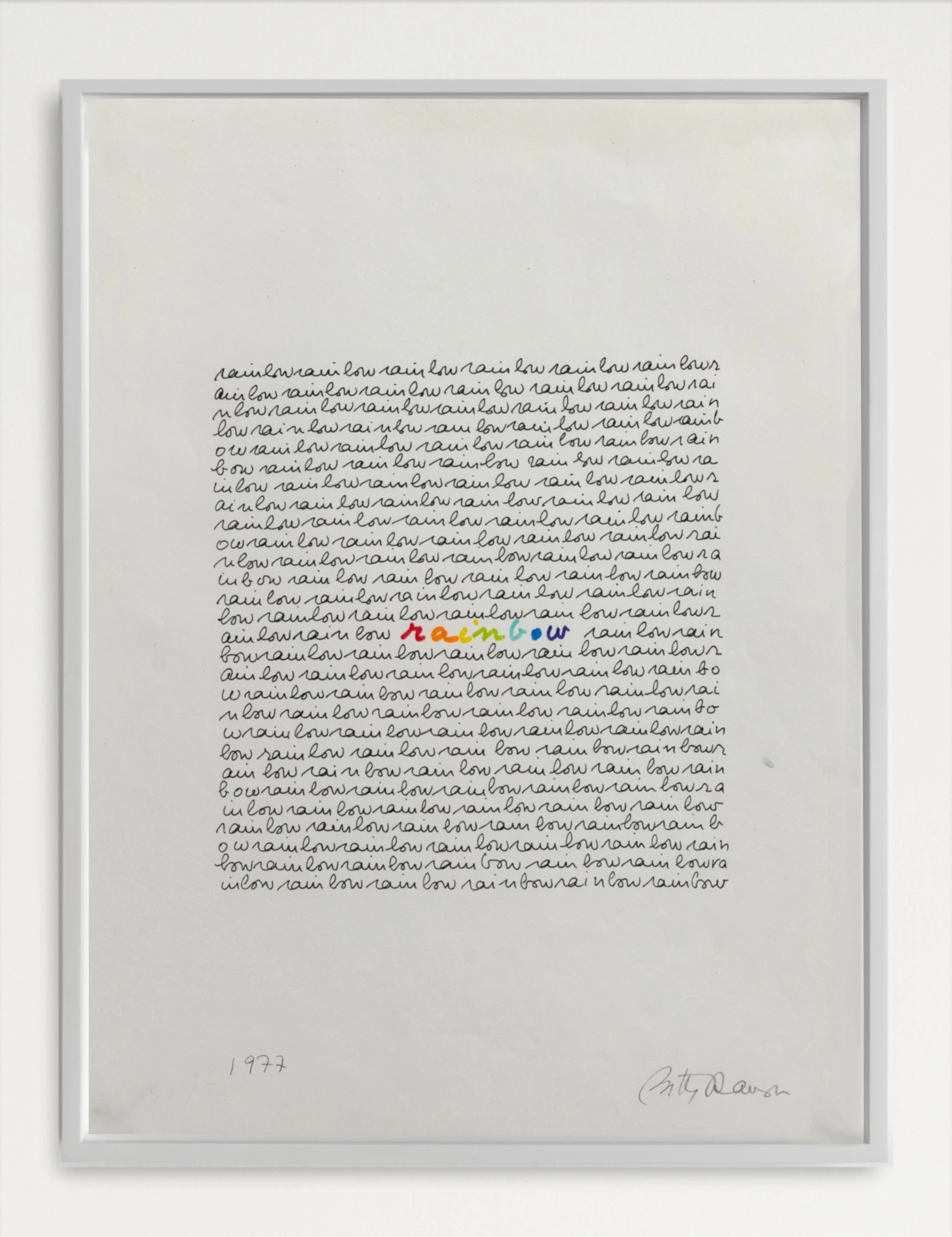
Rainbowland,
1977,
Indian ink on paper, spirit color on paper,
cm 29,6x 21


